To inspect a roof, a drone is usually the quickest, cheapest and safest option because nobody has to work at height. A ladder suits short, low-level checks such as single-storey gutters. Scaffolding, typically £450 to £1,300 for a house roof, is worth it once repairs are agreed or the roof must be opened up.
Key takeaways
- Inspect with a drone first; put up scaffolding only when repairs are agreed.
- Falls from height caused 31 of 126 worker deaths in Great Britain in 2025/26 (HSE, provisional).
- The law says avoid work at height where the job can safely be done otherwise.
- A drone cannot see under slates, inside the loft or into the structure.
- Shared drone photos let roofers quote like for like and pick the right access.
Short answer: to look at a roof, a drone is usually the quickest, cheapest and safest option. A ladder is fine for a short, low-level check, such as the gutters on a bungalow. Scaffolding earns its cost once repair work is going ahead or someone needs to touch, lift or open up the roof. This guide compares all three and shows when you still need hands-on access.
What is the best way to inspect a roof?
For most homes, inspect with a drone first and put up scaffolding only if the photos show work that needs it. The table compares the three methods side by side.
| Drone | Ladder | Scaffolding | |
|---|---|---|---|
| Typical cost | £75 to £200 with us; UK cost guides typically quote £150 to £350 for a house | Usually part of a tradesperson’s call-out or quote | Typically £450 to £800 for the front of a house, £750 to £1,300 around a semi (MyJobQuote) |
| Set-up time | Minutes on the day, after pre-flight checks | Minutes | Booked in advance and erected before anyone goes up; minimum hire typically 6 to 8 weeks |
| Safety | Nobody works at height; the pilot stays on the ground | Work at height; HSE says ladders suit low-risk, short-duration tasks | Safe working platform once properly erected; the erecting itself is work at height |
| What you can see | Every visible slope, chimney tops, flashing, valleys, gulleys, ridges and gutters, from above and close up | The gutter and the lower edge of the roof near the ladder | Everything within reach of the platform, close enough to touch |
| What you can’t see | Under slates and tiles, inside the loft, the condition of timbers | Most of the roof on a two-storey house; the rear and the far slopes | Little, if access is good; hidden areas still need opening up |
| Disruption | Low: a short visit, no equipment left behind | Low | High: poles on the pavement, possible licence, weeks on site |
| Best for | Finding out what is wrong and where, before spending money | Quick low-level checks on single-storey roofs | Carrying out repairs and hands-on investigation |
A fourth option, a cherry picker with an operator, typically costs £350 to £650 a day plus delivery, according to Costwise UK. It gives a close view, but needs room to park and set up, which many Plymouth terraced streets do not have.
Why does working at height matter so much?
Falls from height are the leading cause of work-related deaths in Great Britain. If the same information can be collected from the ground, the law expects that to happen.
Provisional HSE figures for 2025/26 record 126 workers killed in work-related accidents, and falls from a height accounted for 31 of them, more than any other cause. Construction, which includes roofing, was the sector with the most deaths.
The Work at Height Regulations 2005 set the order of priorities. Regulation 6(2) says work must not be carried out at height “where it is reasonably practicable to carry out the work safely otherwise than at height”. Only when that is not possible do you move on to preventing falls. A drone fits the first step neatly: the inspection happens, but nobody leaves the ground.
That does not make ladders wrong. HSE is clear that ladders and stepladders “are not banned under health and safety law” and can be a sensible option for low-risk, short-duration tasks, although they “should not automatically be your first choice”. Climbing a ladder onto a wet slate roof three storeys up to look for a leak is not a low-risk task. Nor is a homeowner doing it at the weekend.
What can a drone see that a ladder or binoculars can’t?
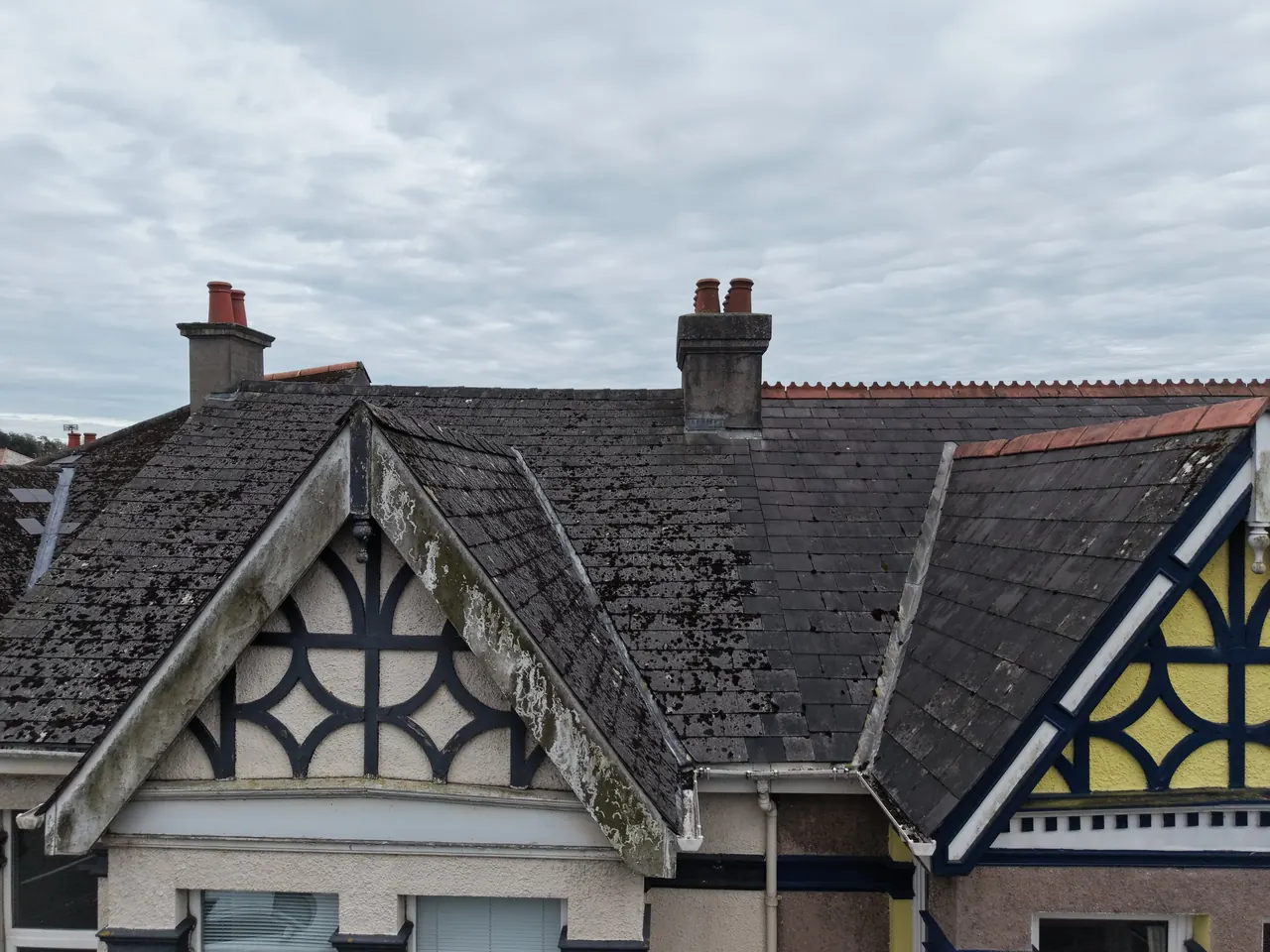
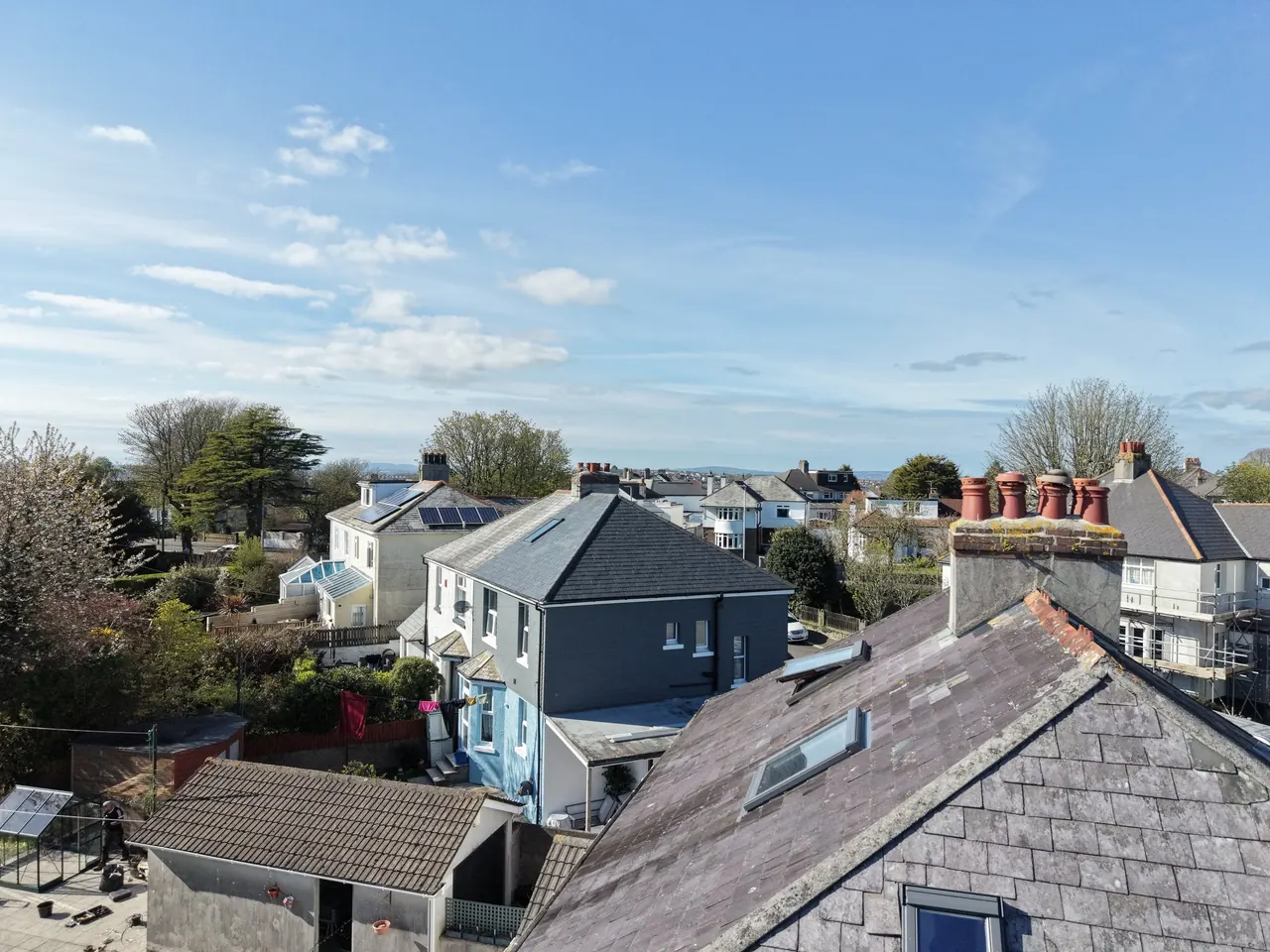
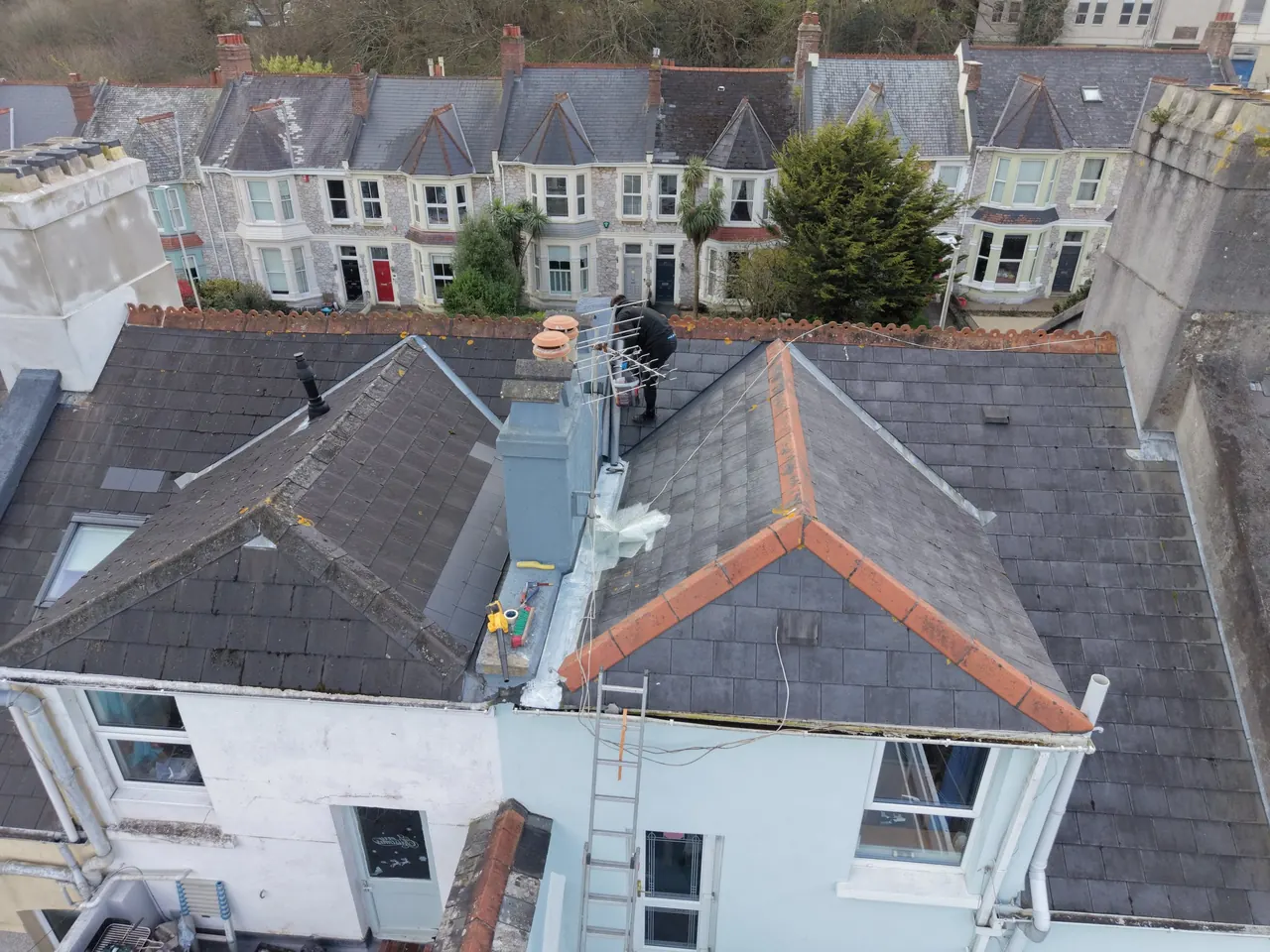
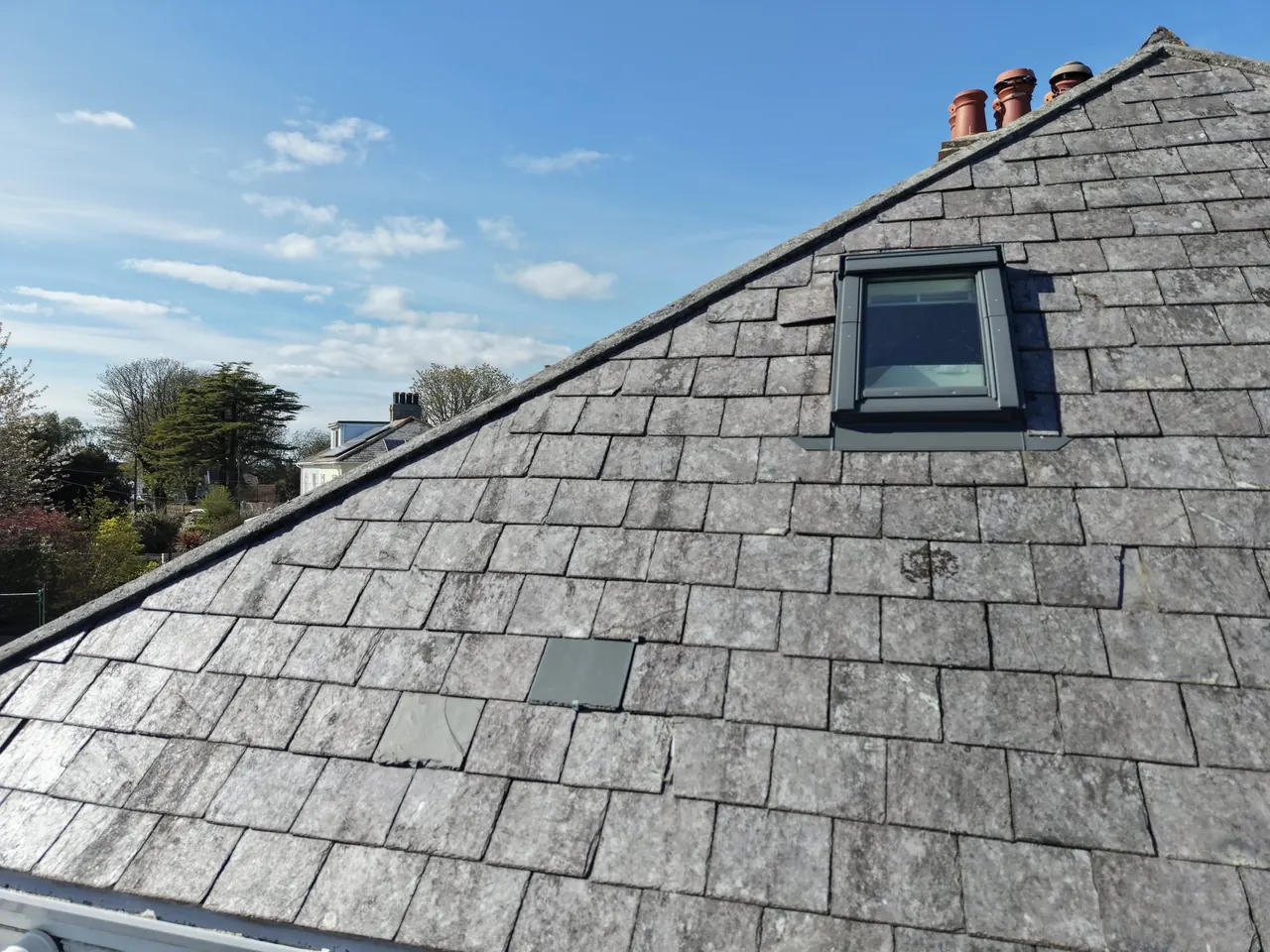
A drone sees the whole roof from above and up close, including the rear slopes, chimney tops, valleys and gulleys that are invisible from the street. That matters on Plymouth’s tall terraces, where much of the roof cannot be seen from the ground.
Even a professional survey has this blind spot. Under the RICS Home Survey Level 2 standard, the surveyor uses binoculars and inspects from ground level or adjoining public property, and uses a ladder only for flat roofs and hatches no more than 3m above level ground. So a survey report will often say that parts of the roof could not be seen. A drone fills that gap (see our pre-purchase roof check).
Some examples from our recent inspections:
- Milehouse Road: a significant leak above the staircase. The drone inspected the lead-lined gulley overhead and pinpointed the problem, which Tom Duggan Roofing then replaced.
- A chimney leak: damp inside, suspected around the chimney. From above we found visible masonry defects and missing flashing, the likely ways water was getting in.
- Fircroft Road: an overhead view of the whole roof layout, coverings, ridges and edges, which no ladder position could give.
What can’t a drone inspection tell you?
A drone inspection is visual only. It shows what is on the surface, not what is underneath, and it is not a structural survey.
It cannot:
- lift slates or tiles to check the battens, felt or membrane underneath;
- tell whether roof timbers are sound, or test a flat roof deck for soft spots;
- see inside the loft, where a leak often shows first;
- see areas hidden by overhanging trees, neighbouring buildings or parapets;
- fly in strong wind, heavy rain, or where the airspace does not allow it.
We say this plainly in our reports. The annotated report includes a section on coverage limitations, so you know what was and was not seen.
When do you still need scaffolding or a roofer on the roof?
You need hands-on access when repair work is going ahead, or when the photos point to something that has to be touched, lifted or opened up to confirm. The drone tells you whether and where. The roofer handles the how.
Typical cases:
- Repairs are agreed. Rebedding a ridge, replacing a gulley or rebuilding a chimney needs a safe working platform, which usually means scaffolding or a roofer’s own access kit.
- The defect is under the surface. If slates look fine but water still comes in, a roofer may need to lift a section to trace it.
- The structure is in question. Sagging ridges or bowed slopes call for a structural engineer or a building surveyor, not just photos.
- Flat roofs with suspected membrane failure. Ponding and splits show up from above, but testing the deck needs someone on it.
Scaffolding is not a step to avoid. It is just a step to take when you know the work is needed, not before.
How does a drone report help roofers quote accurately?
When every roofer quotes from the same photos, you get like-for-like prices and fewer surprises. Without them, each roofer quotes from their own look and their own guess.
- The defect is located. Labelled photos show exactly which slope, valley or stack needs attention, so nobody prices for the whole roof by default.
- The access is clear. A roofer can see from the photos whether the job needs full scaffolding, a chimney scaffold, a tower or just roof ladders. That alone can change a quote by hundreds of pounds. MyJobQuote lists a tower for tiles or gutters at £150 to £350, against £350 to £650 for chimney scaffolding.
- Quotes can be compared. Send the same report to two or three roofers and compare what they propose, not just the bottom line.
- Work can be checked. A second flight after the repair shows the job was done (see our roof work check).
The drone tells you whether and where. The roofer handles the how. Keeping those two jobs separate is what keeps quotes honest.
For landlords and letting agents, the same photos create a dated record of the roof’s condition (see landlords and agents). For a breakdown of our prices, see how much a drone roof inspection costs in Plymouth, or go straight to pricing.
Which method should you choose?
Use a drone to find out, a ladder for a quick low-level check, and scaffolding to fix. In practice:
- Single-storey roof, gutters only, firm ground: a ladder in competent hands may be all you need.
- Leak, storm damage or a worrying noise, source unknown: start with a drone roof inspection or a roof leak investigation. After bad weather, our storm checklist helps.
- One known problem area, such as a chimney: a targeted chimney inspection from £75.
- Repairs agreed: let the roofer arrange scaffolding or access, based on the photos.
- Buying a house: a drone check alongside the survey, to see the parts the surveyor could not.
We work across Plymouth and the surrounding area.
Next step
Not sure whether your roof needs a drone, a ladder or a scaffold? Book a free 15-minute call and describe the problem. If a drone is not the right tool for the job, we will tell you.
Frequently asked questions
Is it legal to fly a drone over my neighbour's roof to inspect mine?
Commercial drone flights in the UK are regulated by the Civil Aviation Authority, and operators must follow the Drone Code on registration, height and distance from people. A short inspection flight over a residential street is normally possible, but we plan each flight around neighbouring properties and privacy, and aim to photograph only the roof we have been asked to inspect.
Can a drone inspect a flat roof?
Yes. From above, a drone shows ponding water, splits, blistering, lifted edges and the condition of upstands and outlets very clearly. What it cannot do is test whether the deck underneath is soft or wet. If the photos suggest the membrane has failed, a roofer will need to get on the roof to confirm the extent before quoting for repairs.
Will my roofer accept a drone report instead of seeing the roof?
Most roofers welcome clear photos because they help them price the right job and plan access. Many will still want to see the roof themselves before starting work, which is sensible. The report's value is that every roofer starts from the same evidence, so you can compare quotes and spot work that has not been asked for.
How close can a drone get to a chimney?
Close enough to show the pots, the flaunching on top of the stack, the pointing and the lead flashing where the stack meets the roof. We keep a safe distance from the masonry and adjust for wind, which on the Plymouth coast can be gusty. Top-down shots into the pots are often the most useful view of all.
Sources
- HSE: Work-related fatal injuries in Great Britain
- The Work at Height Regulations 2005, regulation 6
- HSE: Ladders and stepladders
- RICS: Description of the RICS Home Survey Level 2
- MyJobQuote: Cost of hiring scaffolding (UK 2026)
- MyJobQuote: Roof survey cost guide (updated October 2026)
- Costwise UK: Cherry picker hire cost 2026
- UK Civil Aviation Authority: The Drone Code