After a storm, stay off the roof and ladders. Check from the ground and the loft, take dated photos of all damage, and contact your insurer early. Only arrange temporary repairs that stop further damage, and keep receipts. Once the wind drops, get the roof checked by a drone or a vetted roofer, never a doorstep caller.
Key takeaways
- Never climb onto the roof or a ladder after a storm; check from the ground and the loft.
- Photograph damage wide and close, keep the original files, fallen slates and every receipt.
- Most policies that set a wind speed define a storm as 55 mph or more, but pre-existing wear can still sink a claim.
- Turn away doorstep roofers and get three written quotes from established firms.
- A drone records the whole roof without scaffolding once the weather settles.
After a storm, stay off the roof, check what you can from the ground and the loft, photograph everything, and tell your insurer early. Then get the roof looked at properly once the wind has dropped. This checklist is written for homeowners in Plymouth and the rest of Devon, where autumn and winter storms arrive off the Atlantic most years.
Is it safe to check your roof after a storm?
Only from the ground and from inside. Never climb onto a roof or up a ladder after a storm, however small the damage looks.
Wet slate and moss are slippery, loose slates can slide without warning, and a damaged chimney stack can be unstable. Before you go outside:
- Wait until the wind has properly dropped. Slates and ridge tiles can keep falling after the worst has passed.
- Keep clear of the area below the eaves and the chimney, and keep children and pets away.
- Stay well away from fallen cables and report them to the network operator by calling 105.
- If water is coming through near light fittings or sockets, switch off the electricity at the consumer unit if you can do so safely, and call an electrician.
What should you check from the ground?
Walk around the house and look up, ideally with binoculars or a phone camera zoomed in. You are looking for anything missing, moved or bent.
- Slates or tiles missing, slipped or lying on the ground, path or in the gutter.
- Ridge and hip tiles that have shifted, or gaps in the mortar beneath them.
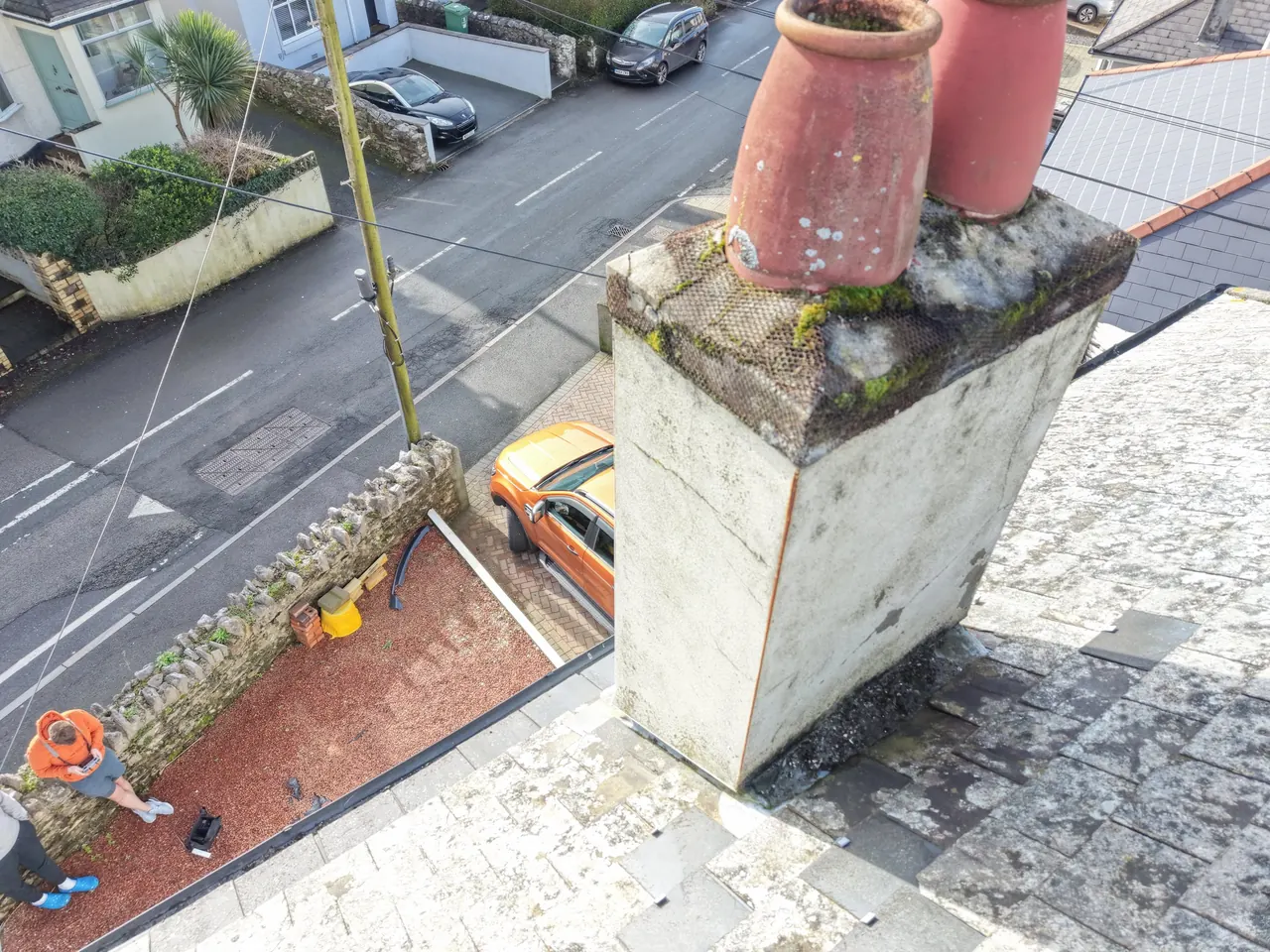
- Chimney stack: missing or tilted pots, loose bricks, and lead flashing lifted away from the brickwork.
- Gutters and downpipes: sagging, detached or full of debris and grit washed off the roof.
- Fascias, soffits and bargeboards that have pulled away.
- Rooflights, vents and aerials that have moved.
- Neighbouring roofs, especially on a terrace, where damage next door can affect you.
Wind damage often shows up on the sheltered side of ridges and hips rather than the side facing the wind, according to guidance from the Society for the Protection of Ancient Buildings, so check every slope you can see.
What should you look for in the loft?
Daylight, drips and damp. The loft often shows a problem before a ceiling stain does.
- Daylight showing through the roof covering
- Wet or darkened timber, damp patches on the underside of the roof or felt
- Wet insulation, particularly around the chimney breast and along valleys
- Water staining on ceilings, walls or around the chimney breast in upstairs rooms
Only go into the loft if there is safe boarding and lighting. Put a bucket under any drips and move belongings out of the way.
How should you photograph storm damage for an insurance claim?
Take lots of dated photos and videos before anything is moved or repaired, and keep every receipt. The Association of British Insurers (ABI) advises contacting your insurer as soon as possible and documenting all storm damage with pictures, videos and receipts.
- Start wide, then go close. Show the whole house and the street first, then each damaged area, then close-ups.
- Keep the originals. Do not crop or edit them; the date and time stored in the file is useful evidence.
- Photograph inside too: ceiling stains, wet insulation, damaged belongings.
- Keep fallen slates or tiles and any damaged items until your insurer says otherwise.
- Write down the date and time of the storm and when you first noticed the damage. Save any Met Office warnings that covered your area.
Many insurers run 24-hour claim lines. Ring them before arranging anything beyond emergency repairs.
What counts as a "storm" for home insurance?
Most policies that define a storm by wind speed use gusts or winds of 55 mph or more. But wording varies, and wind speed is only part of the test.
A 2025 Which? review found that 93% of the 89 policies it examined that set a wind speed used a minimum of 55 mph, in line with the Beaufort scale. One policy quoted in a Financial Ombudsman Service (FOS) decision defined a storm as "a violent gale force 10 on the Beaufort scale reaching wind speeds of 55 mph or above and/or 25mm or more of rainfall in any 24-hour period". Read your own policy wording.
When storm claims are disputed, the FOS asks three questions:
- Did storm conditions occur on or around the date of the damage?
- Is the damage consistent with what a storm typically causes?
- Were the storm conditions the main cause, or would the damage have happened anyway?
The third question is where many roof claims fail. If a roof was already in poor repair, the problem should have been clear to the homeowner and the storm simply highlighted it, the FOS says it is unlikely to uphold a complaint. The insurer still has to show that an exclusion applies. It also notes that weather stations can be a few miles from your house, so local conditions may differ from the official record.
A dated set of photos of your roof taken before winter is one of the simplest ways to show what changed after a storm.
What temporary measures are sensible?
Anything that stops more damage without putting you at risk. The ABI advises arranging emergency repairs to stop damage getting worse, talking to your insurer first, and keeping the receipts.
- Catch drips and protect floors and furniture.
- Move valuables and electrics away from leaks.
- Leave tarpaulins, sheeting and anything at height to a roofer.
- Ask for a written note of any emergency work done, with photos.
Emergency roofing call-outs typically cost £150-£300 plus the repair itself, according to MyJobQuote's 2026 cost guide.
How can a drone help after a storm?
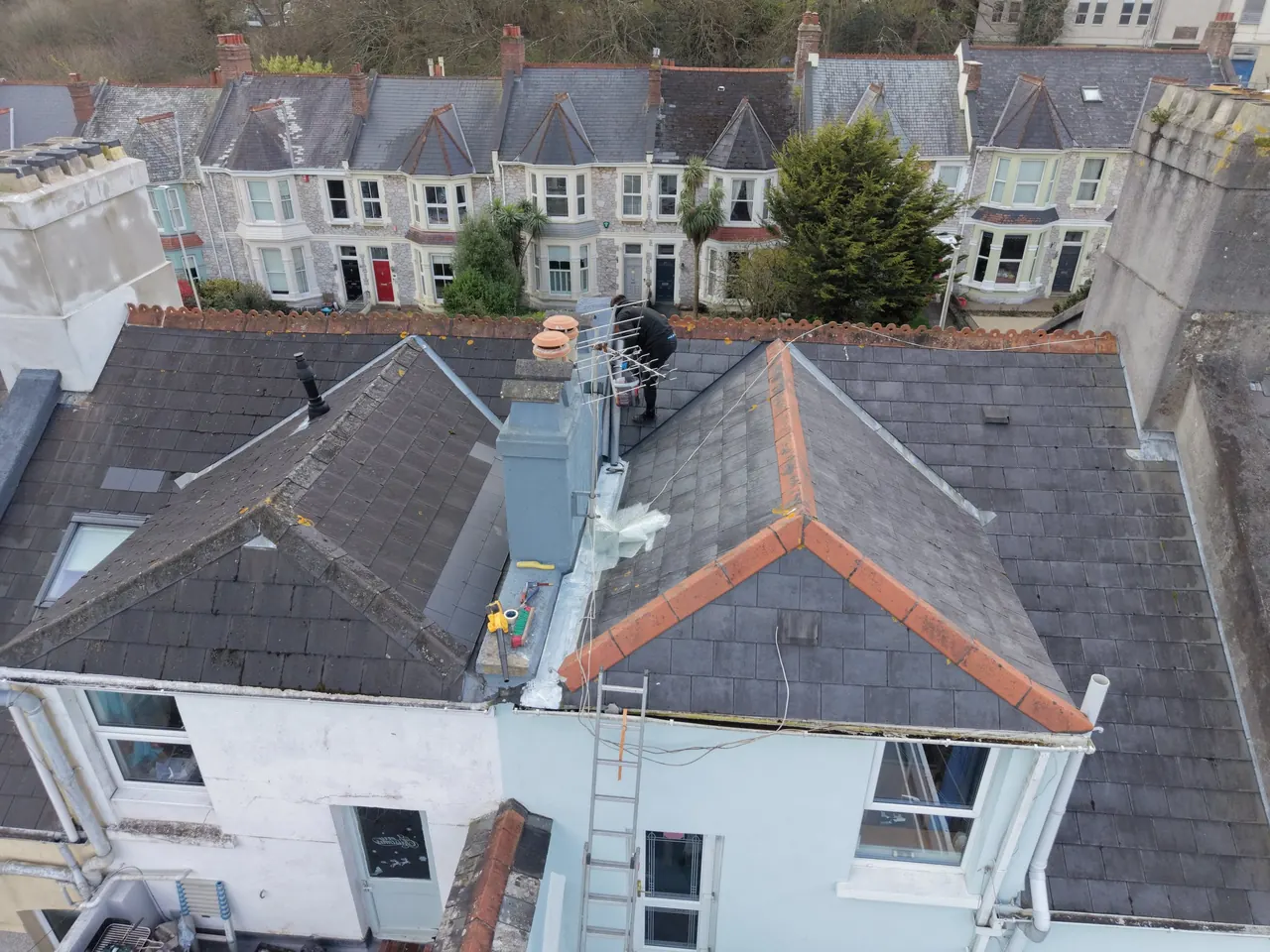
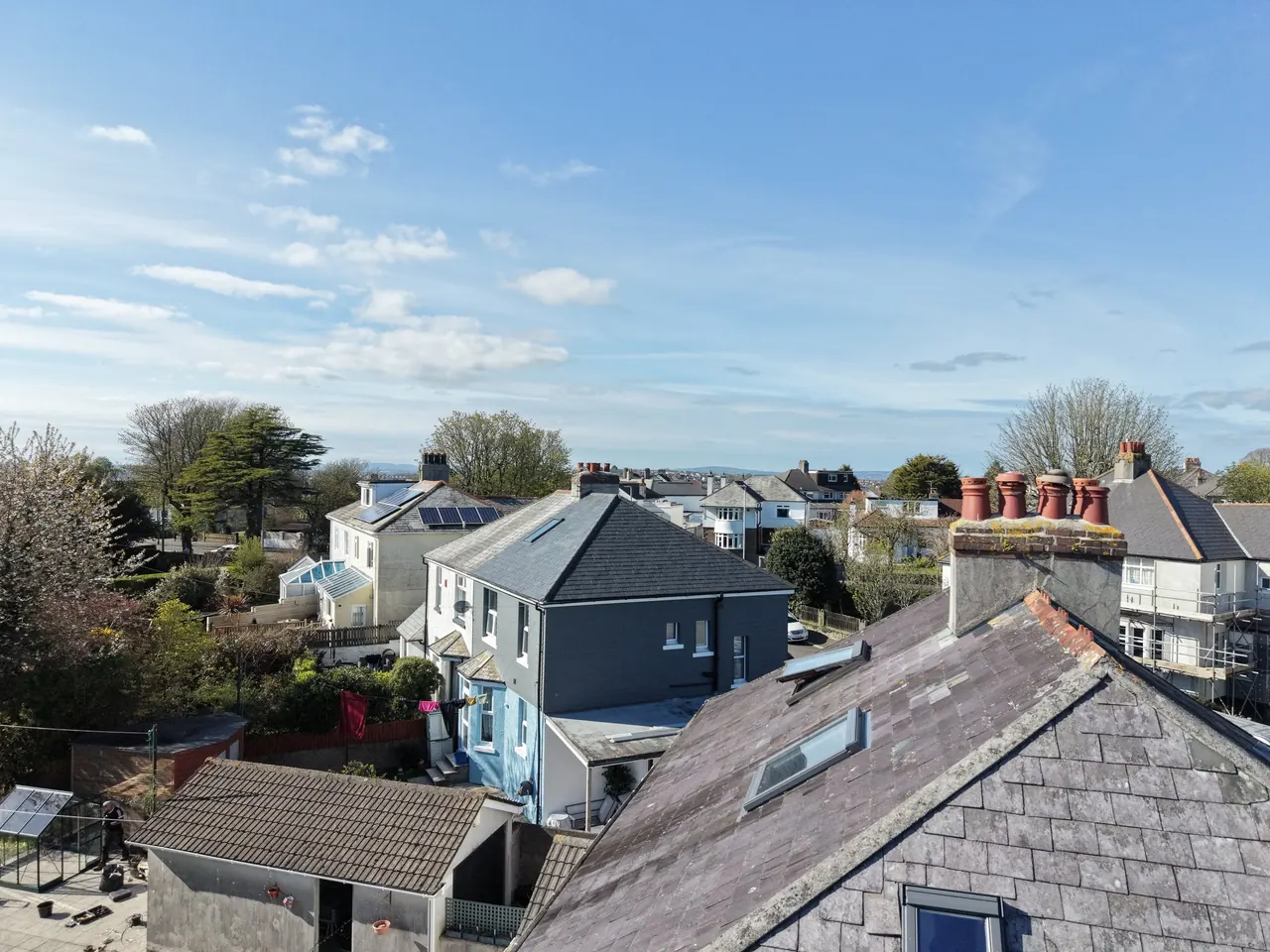
A drone gives you clear, dated photos and 4K video of the whole roof within a short visit, without ladders or scaffolding. That evidence helps both your roofer and your insurer.
Scaffolding just to look is slow and expensive. MyJobQuote puts scaffolding for roof work at £450-£1,300 for a typical house, usually on a 6 to 8 week minimum hire. A drone shows missing slates, shifted ridges, lifted flashing and blocked valleys from above, including slopes you cannot see from the street.
On Plymstock Road, the owner was worried about missing tiles. Our full roof inspection confirmed them, so repairs could be targeted at the right spots rather than guessed at. Typical options:
| After the storm you need… | Package | Price |
|---|---|---|
| A look at one spot, such as the chimney or a suspected missing slate | Targeted Roof Inspection | £75 |
| Every visible slope, chimney, valley and gutter checked | Full Roof Visual Inspection | £150 |
| Labelled photos and a PDF you can send to an insurer or roofer | Roof Inspection & Annotated Report | £200 |
Two honest limits. We cannot fly safely in strong wind or heavy rain, so inspections happen once the weather settles, and airspace permitting. And our inspections are visual records, not structural surveys or loss-adjuster reports: your insurer decides the claim. See our roof inspection and roof leak investigation services, or read drone vs scaffolding.
When should you call a roofer straight away?
Call a roofer immediately if water is coming in, the chimney looks unstable, or anything loose could fall onto a path or road. Do not wait for an inspection first in those cases.
- Water coming through a ceiling or running down walls
- A leaning stack, fallen pots or loose bricks
- A large area of slates or tiles missing
- Ridge tiles or flashing hanging loose above a footpath
For less urgent damage, an inspection first means the roofer quotes for what is actually there. For repairs we can recommend Tom Duggan Roofing, who we work with in Plymouth.
How do you avoid storm-chasing rogue roofers?
Do not agree to work from anyone who knocks on your door after a storm. Trading Standards for Devon, Plymouth, Somerset and Torbay advises against accepting work from unsolicited doorstep callers.
A common tactic is to claim they have "spotted" damage on your roof and need to start today. Instead:
- Get three written quotes from established local firms.
- Check public liability insurance and trade body membership on the scheme's own website, such as the NFRC, TrustMark or Buy With Confidence. NFRC contractors must pass an inspection before joining and are inspected every three years after.
- Do not pay before work starts. Pay by card or bank transfer and get an invoice.
- If someone is pressuring you on your property, call 999. Report rogue traders through the Citizens Advice consumer helpline on 0808 223 1133.
If you agree building work at home, Citizens Advice says you usually have 14 days to cancel. That protection does not apply automatically when you invite a trader in for urgent repairs, which is exactly why rushed post-storm deals are risky. Independent photos of your roof let you check any doorstep claim before you spend a penny.
When is storm season in the South West?
Mainly from autumn through to early spring. The Met Office's storm-naming year runs from early September to late August, and storms are named when they could cause medium or high impacts, typically meaning amber or red warnings.
Met Office climate data for south-west England shows the highest mean wind speeds from November to March (measured at St Mawgan), and Plymouth averages about 16 days of gale a year. The strongest winds come from between the south and the north-west. In the Burns' Day storm of January 1990, Plymouth recorded a gust of 84 knots, about 97 mph. The first two names on the 2026/27 list, Austen and Boelo, were both used in late October 2026.
The best time to check a roof is before the season starts: clear gutters and valleys, fix slipped slates and get a dated photo record. If you let property, our landlord roof maintenance guide covers this, and you can see what is common locally in slate roof problems in Plymouth.
Next step
If a storm has left you worried about your roof, we can show you what has changed without anyone going up a ladder. We are based in Plymouth, inspections start at £75 (see pricing), and the first 15-minute call is free. Contact us with your address and what you have noticed, and we will book the first suitable flying day.
Frequently asked questions
How soon should I report storm damage to my insurer?
As soon as you reasonably can. The ABI advises contacting your insurer promptly, and many insurers run 24-hour claim lines for emergencies. Reporting early also lets them approve emergency repairs and, if needed, send a surveyor while the damage is fresh. Check your policy for any notification time limits and keep a note of who you spoke to and when.
What if the wind where I live was below 55 mph?
Your claim is not automatically lost. The Financial Ombudsman Service says weather stations can be a few miles from a property and local conditions may differ. It also notes a storm generally involves violent winds, usually with rain, hail or snow, but it may sometimes find a storm without high winds. Policy wording matters, so read your own definition carefully.
Can a drone inspection be used as evidence for my insurance claim?
Our photos and 4K video give a clear, dated record of the visible condition of your roof, which you can share with your insurer or roofer. They are not a loss adjuster's report or a structural survey, and the insurer makes the decision on any claim. An annotated PDF report, with labelled photos and locations of visible damage, is often the easiest format to send.
Can a drone fly straight after a storm?
Not while it is still windy or raining heavily. Flying in strong gusts is unsafe and gives poor images, so we inspect once the weather settles, airspace permitting. Most storms pass within a day or two, and in the meantime you can carry out the ground and loft checks in this guide and catch any drips safely.
Sources
- Met Office: Official storm names for 2026/27 revealed
- Met Office: UK Storm Centre
- Met Office: South West England climate
- ABI: Practical advice ahead of the first named storms of the season
- Financial Ombudsman Service: Storm damage
- Financial Ombudsman Service decision DRN-5207353
- Which?: The claim after the storm (April 2025)
- SPAB: Slating in South-West England
- Trading Standards Devon, Plymouth, Somerset and Torbay: Scams, rogue traders and doorstep crime
- Citizens Advice: Cancelling building or decorating work
- NFRC: Choosing a roofing contractor
- MyJobQuote: Roof repair costs (October 2026)