
Find where the water’s getting in before you pay for the wrong repair
Water rarely comes through the ceiling directly below the hole. We look at the roof above and around your leak, so you and your roofer can see the likely cause.
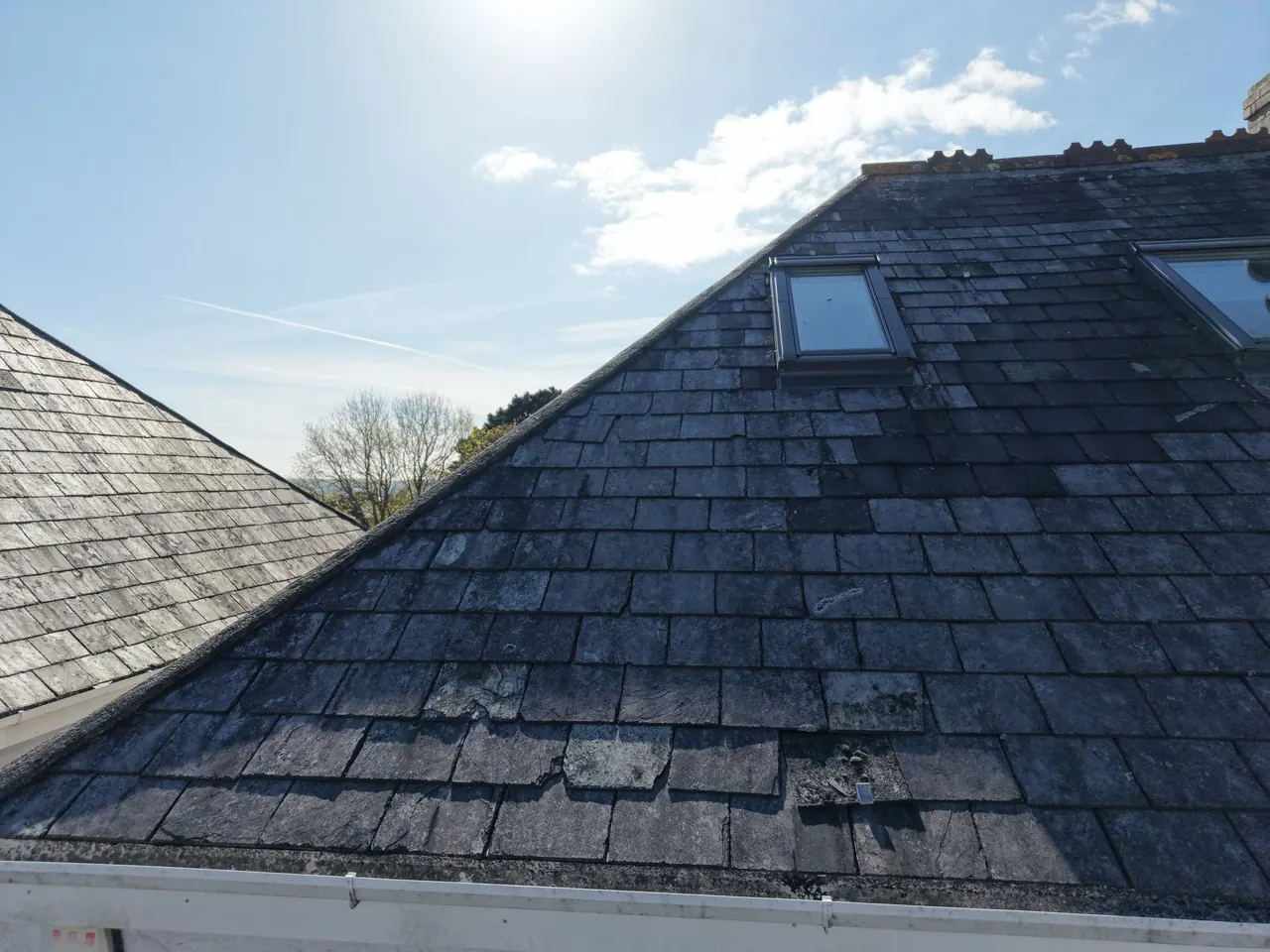
What we check
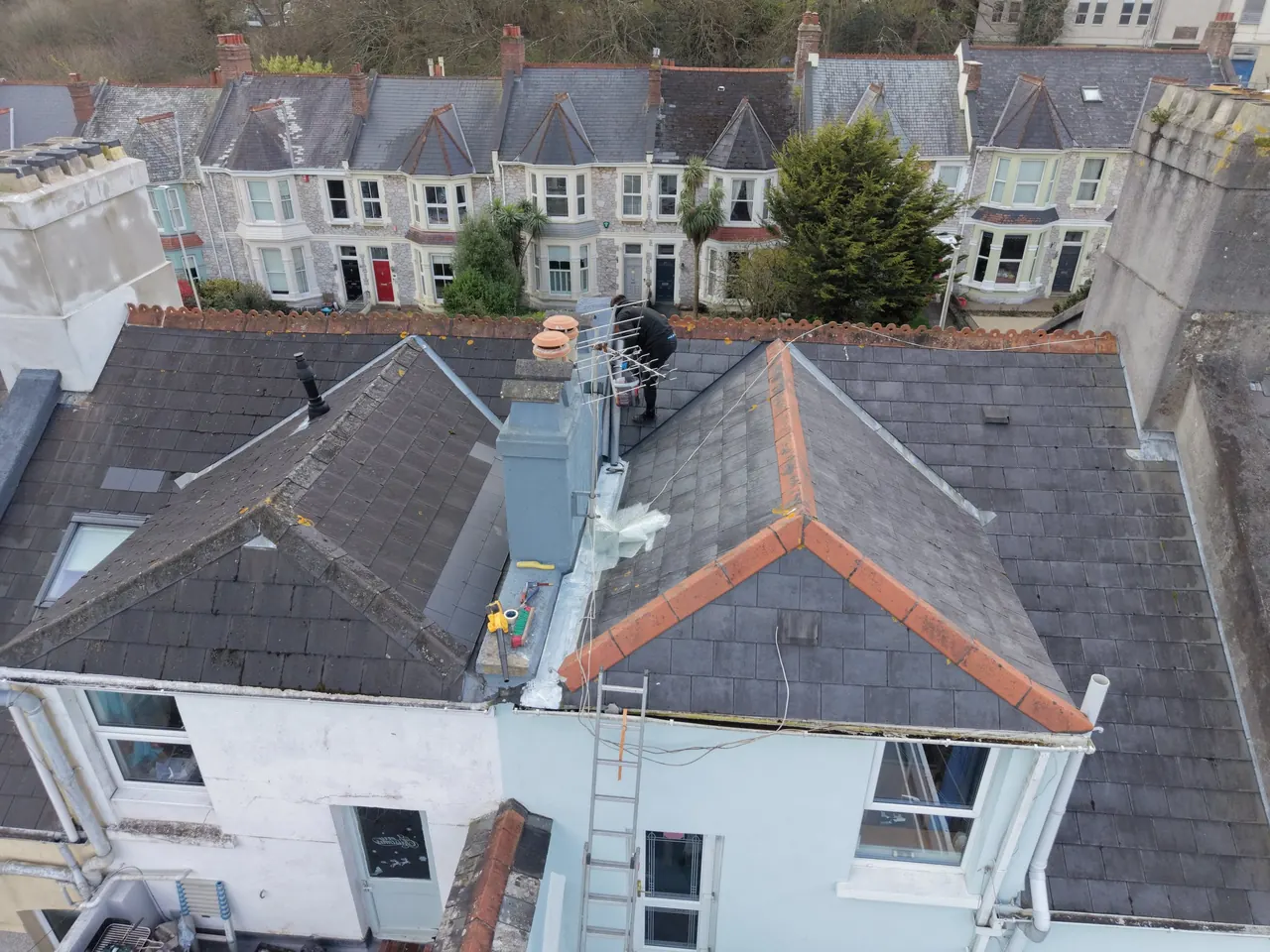
- Lead gulleys and valleys above or near the leak
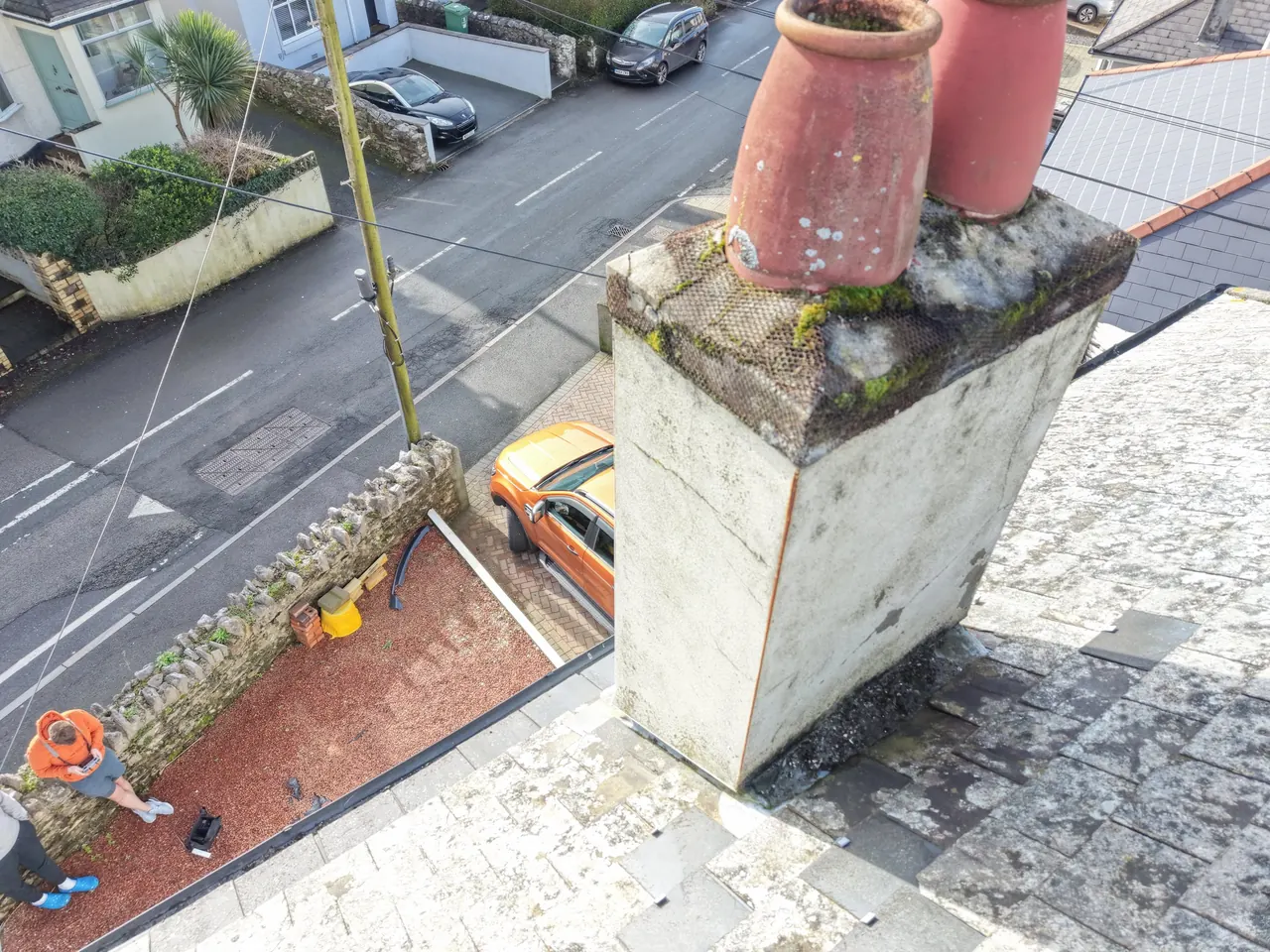
- Flashing around chimneys, abutting walls, dormers and rooflights
- Slipped, cracked or missing slates and tiles
- Ridge and hip tiles and their mortar
- Flaunching and pointing on nearby chimney stacks
- Gutters and outlets that could be overflowing back under the roof edge
What you get
- Close-up photographs of the roof area above and around the leak
- A brief summary of visible defects that could explain it
- With the £150 full inspection: photos and 4K video of the whole roof, in case the source is further away
- Images your roofer can use to plan the repair before going up
When to book
- A brown stain or a drip appears on a ceiling
- Damp shows up only in heavy or wind-driven rain
- A leak has come back after a repair
- Water is running down an inside wall near a chimney breast
- There are drips or wet timbers in the loft after a storm
- Your roofer can’t see the problem from a ladder
Why is a roof leak so hard to find?
Water that gets through a roof doesn’t fall straight down. It runs along the underside of slates, the felt, the battens and the rafters until it finds a low point, then drips onto the ceiling. The stain you see in the bedroom can be a metre or more from where the water actually got in.
Some leaks only appear when the rain comes from a particular direction, or after several wet days, which makes them even harder to pin down. And the parts of a roof that most often fail, such as lead valleys, gulleys, chimney flashing and the joints around rooflights, are exactly the parts you can’t see from the ground.
That’s why the first step is to look at the outside of the roof, above and around the leak, closely enough to spot a lifted lead edge or a single slipped slate. Our guide on how to find a roof leak explains the common sources in more detail.
How did we find the Milehouse Road leak?
The owner of a house on Milehouse Road had a significant internal leak above the staircase. Ceilings over stairwells are awkward to reach, and the roof above was no easier: the likely culprit sat in a lead-lined gulley that couldn’t be seen from the street or the garden.
We flew the drone over the gulley and photographed it from directly above. The images pinpointed the problem in the lead lining. With that evidence, Tom Duggan Roofing replaced the gulley, fixing the cause rather than patching the symptom.
That’s the pattern we aim for: find the visible cause, give the roofer clear pictures, and avoid paying for repairs to the wrong part of the roof. If your leak is near a chimney, see our chimney and flashing inspection; for valleys and gutters, our gutter and valley inspection. More jobs are on the recent inspections page.
What should you do while you wait for the inspection?
A few simple steps limit the damage and make the inspection more useful:
- Catch the water and move furniture, rugs and electrics away from the drip.
- Photograph the stain and mark its edge in pencil, so you can tell if it grows.
- Note when it leaks: during heavy rain, only in strong wind, or a day later. Wind direction is a useful clue.
- Look in the loft only if it’s safe to do so, with a torch, and stay on the joists.
- Turn off the electrics to that area if water is near a light fitting, and call an electrician.
Don’t go up on the roof yourself. Wet slates are slippery and old ones break underfoot. If the weather is stormy, see our roof checklist after a storm.
Targeted or full inspection: which do I need?
If the leak is in one clear spot, such as a stain beneath a chimney or under a valley, a Targeted Roof Inspection (£75) covers that area with selected photos and a brief summary. That’s how most leak investigations start.
If you’re not sure where the water is coming from, if there are several damp patches, or if the leak has come back after a repair, the Full Roof Visual Inspection (£150) is the safer choice. It covers every safely visible slope, chimney, valley and gutter, with photos and 4K video, so nothing nearby gets missed.
If you need written evidence, for example for a landlord, an insurer or a dispute over a previous repair, the Annotated Report (£200) adds a PDF with labelled photos. Compare all three on our pricing page.
What a drone cannot tell you
A drone shows visible defects on the outside of the roof. It can’t see under slates, behind flashing or inside the roof space, and it can’t trace water once it’s inside the building. Sometimes there’s no visible defect at all: the leak may be from torn felt, a hidden joint, a plumbing pipe, condensation or a wall rather than the roof. In that case the photos still rule out the obvious causes and help your roofer decide what to check next. This is not a structural survey. We only fly in dry, reasonably calm weather, so a booking can move if the wind picks up or it rains. We fly within UK Civil Aviation Authority rules; a few locations need extra permission or can’t be flown at all, and we’ll tell you before booking if yours is one of them. to confirm: CAA Operator ID and pilot qualifications to show here
Questions
Can a drone find every roof leak?
No. A drone finds leaks caused by defects you can see from above: lifted or split lead, slipped or missing slates, cracked flaunching, blocked valleys and gutters. Many leaks have a visible cause like these. Some don’t, such as torn felt under sound-looking slates. Even then, the photos narrow the search and stop you paying for repairs to parts of the roof that are fine.
What if you don’t find a visible cause?
We’ll tell you plainly that we couldn’t see one, and show you what we checked. That’s still useful: it rules out the obvious external causes and points your roofer towards the less visible ones, such as underlay, hidden joints or the loft. It’s also worth checking for causes that aren’t the roof at all, like plumbing, condensation or a defective wall.
Can you inspect while it’s raining?
No. We need dry, reasonably calm weather to fly safely and get sharp photos; raindrops on the lens hide exactly the detail you need. Book as soon as you notice the leak and we’ll fly on the next suitable day. In the meantime, catch the water, keep electrics dry, and note when the leak appears, as it helps narrow down the cause.
Is it worth it if I already have a roofer?
Often, yes. Many roofers can’t safely see a valley or the back of a chimney without scaffolding or a roof ladder, so their first quote can be a best guess. Photos from above let them plan the repair and price it accurately. At Milehouse Road, our images showed the failed gulley and Tom Duggan Roofing replaced it.
Could the leak be coming from something other than the roof?
Yes. Water marks on ceilings can come from leaking pipes, a bathroom above, condensation in a cold loft, or rain getting through walls, render or window frames. If the leak appears without rain, suspect plumbing first. If it only appears in wind-driven rain, the roof or walls are likelier. Our inspection covers the roof; other causes need a plumber or builder.
Tell us about your roof
Send the address area and what you are worried about. We reply within one working day with options and a fixed price.
Prefer to talk it through? Book a free 15-minute call and we will help you choose the right inspection.