
Find out what’s happening at the top of your chimney
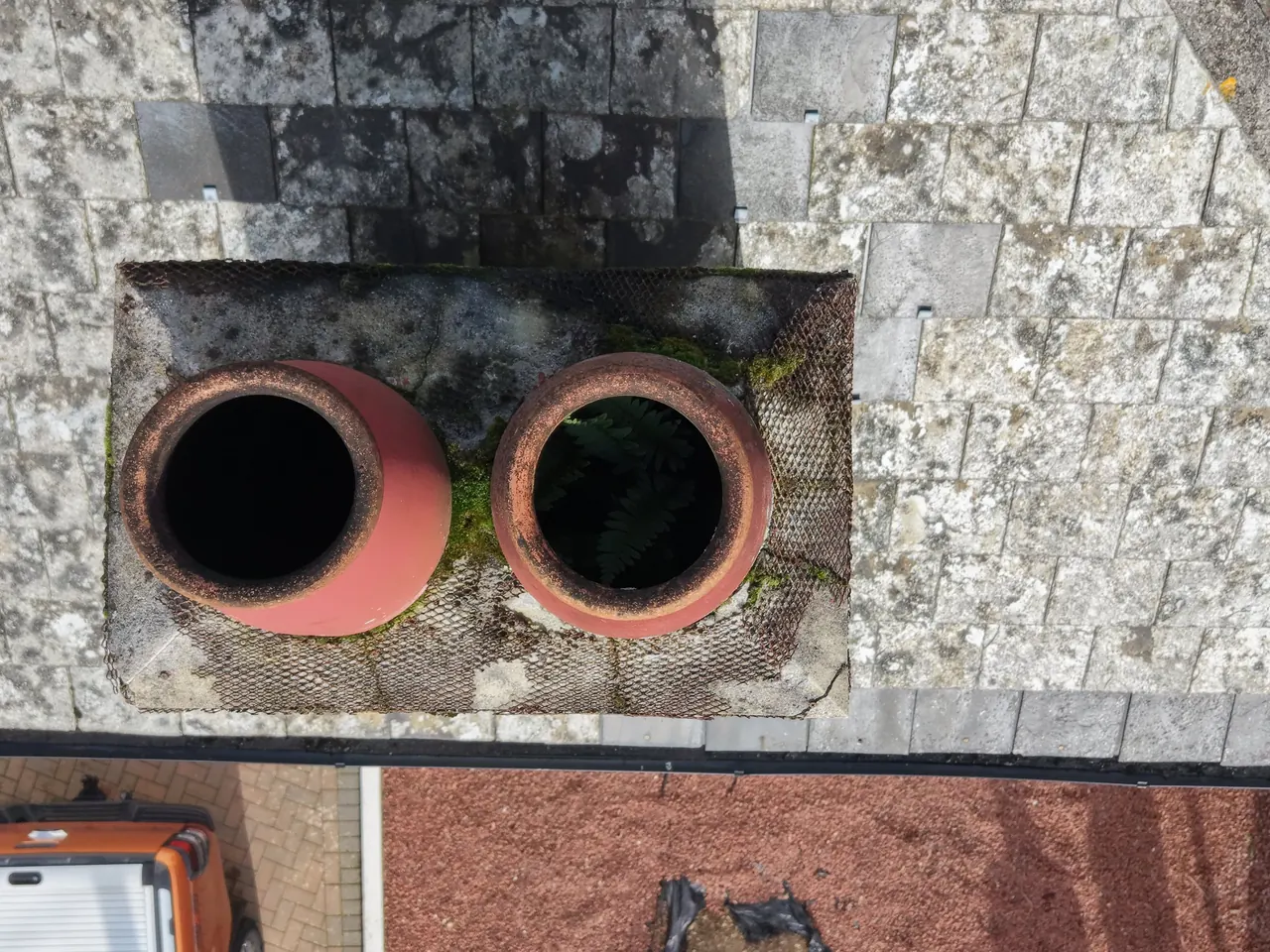
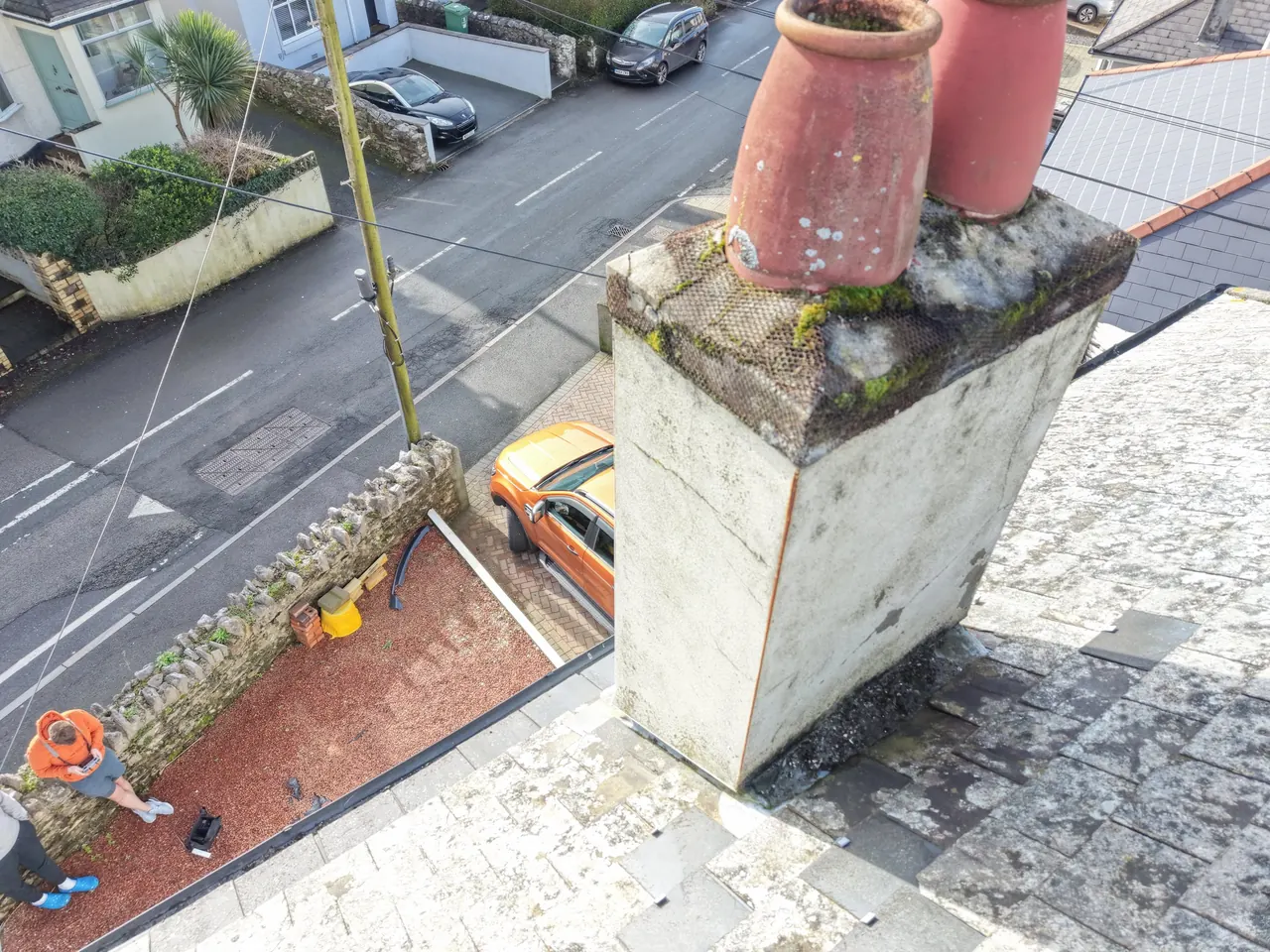
Chimneys are the part of the roof people see least and worry about most. We fly up to the stack and photograph the pots, flaunching, pointing and flashing at close range.
What we check
- Chimney pots: cracked, loose, leaning or missing
- Flaunching, the mortar cap the pots are bedded in
- Brick or stone pointing on every visible face of the stack
- Lead flashing and soakers where the stack meets the slates
- The back gutter behind the stack on the uphill side
- Cowls, caps and bird guards
- Aerials and brackets fixed to the stack
- Moss, plants or nesting material on the stack
What you get
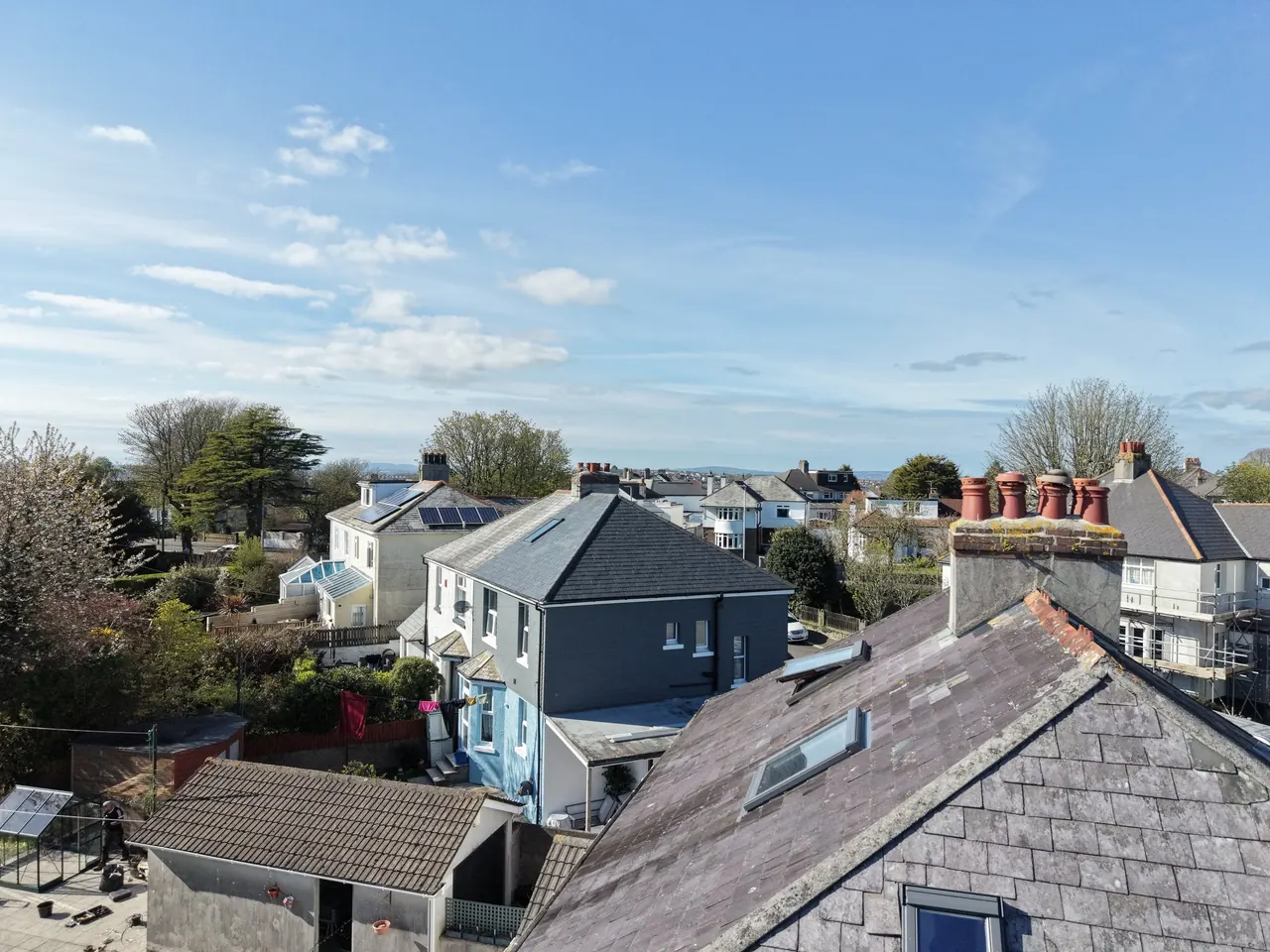
- Selected close-up photographs of the stack from several angles, including from above
- A brief written summary of the visible observations
- Images clear enough to share with a roofer or chimney specialist
When to book
- Damp or staining on a chimney breast, or on a ceiling near the stack
- Bits of mortar, brick or pot in the gutter or on the path
- A pot looks like it’s leaning, or one has disappeared
- After high winds have battered the roofline
- You’ve been quoted for a stack rebuild and want to see the condition yourself
- Before you bring an old fireplace back into use (we check the outside; a sweep or installer checks the flue)
Why do chimneys cause so many leaks?
A chimney stack is a brick or stone tower sticking up through the roof, exposed on all sides to wind and rain, and joined to the slates by strips of lead. Each of those parts wears out in its own way.
- Flaunching, the sloped mortar around the pots, cracks with age and frost, letting water into the top of the stack.
- Pointing between the bricks or stones erodes, so the stack soaks up rain like a sponge.
- Lead flashing can lift, split or come away from the joint it’s tucked into, opening a gap where the stack meets the roof.
On exposed coastal roofs, wind-driven rain finds these gaps quickly. The water then runs down inside the stack or along the rafters and shows up as a damp patch somewhere below, often not exactly where the fault is. That’s why a close look at the outside of the stack is usually the first step.
What did we find on a Plymouth chimney leak?
One of our recent jobs started with a suspected internal leak around a chimney. From inside, the owner could see the damp but not the cause, and from the ground the top of the stack was simply too high and too far back to judge.
The drone photographs showed visible masonry defects on the stack and sections of missing flashing where it met the roof: clear water ingress points. With those images, the repair could be aimed at the actual gaps rather than a general “we’ll redo the chimney” quote.
Not every chimney inspection finds a problem. Sometimes the photos show a stack in decent condition and point the search elsewhere, to a valley, a gutter or a slipped slate nearby. If you’re dealing with a leak and aren’t sure where it starts, our roof leak investigation looks at the wider area. More examples are on our recent inspections page.
Why not just look from the street or the loft?
From the street you see the front of the stack from below. You can’t see the top of the flaunching, the back gutter on the uphill side, or the flashing on the far side, which are the places that most often let water in. Binoculars help a little, but the angle is still wrong.
From the loft you can sometimes see staining on the brickwork or timbers around the stack. That tells you water is getting in, but not where it’s coming from on the outside.
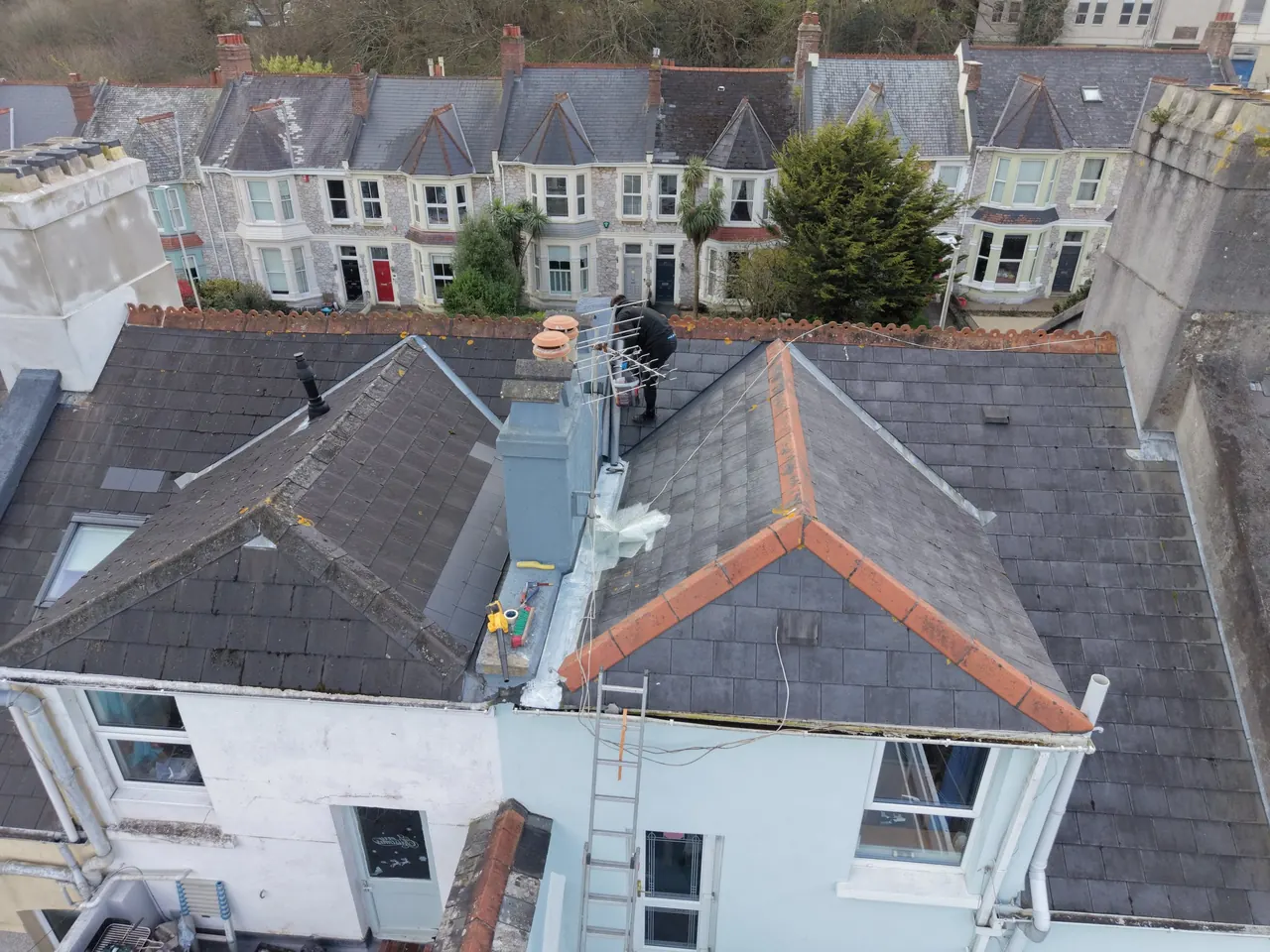
A ladder gets a roofer to the eaves, not to the top of a stack on a two- or three-storey Plymouth terrace. Getting there safely normally means a roof ladder or scaffolding, and typical domestic scaffolding runs into hundreds of pounds before any repair starts. A drone gets close to every face of the stack in one visit, at £75.
What happens after a chimney inspection?
You’ll get the photos and a short summary of what we could see. If there’s a visible defect, you can send the images to roofers for quotes, so everyone is pricing the same problem. We don’t do repairs ourselves; if you want a name, we have recommended Tom Duggan Roofing to past clients.
Once the work is done, many people like to see it. A quick after-photo of the repaired stack is part of our before and after roof work check.
If you’d rather have the whole roof covered while we’re there, the full roof inspection at £150 includes chimneys, flashing, valleys and gutters on every visible slope. Prices for all three packages are on our pricing page.
What a drone cannot tell you
This is a visual inspection of the outside of the stack. We don’t inspect or test the flue, the chimney breast inside the house, or whether a fireplace or stove is safe to use; that’s a job for a chimney sweep or a registered installer. We can’t see behind lead flashing or inside the brickwork, and we can’t judge the structural stability of a stack. If something looks unsafe, we’ll tell you and suggest you get a roofer or structural engineer to assess it. We only fly in dry, reasonably calm weather, so a booking can move if the wind picks up or it rains. We fly within UK Civil Aviation Authority rules; a few locations need extra permission or can’t be flown at all, and we’ll tell you before booking if yours is one of them. to confirm: CAA Operator ID and pilot qualifications to show here
Questions
Do you inspect inside the chimney flue?
No. We photograph the outside of the stack: pots, flaunching, pointing and flashing. We don’t look down the flue for blockages or test whether it’s safe to burn in. For that, use a chimney sweep, and if you’re fitting a stove, a registered installer. Our photos can still help them, for example by showing a missing cowl or a cracked pot.
Can you inspect a chimney stack shared with next door?
Yes. On terraced and semi-detached houses most stacks are shared, and the drone photographs the whole stack as it can be seen. Our images can be useful when you talk to your neighbour about a repair you’d both benefit from. Who pays for a shared stack is a matter between owners, so check your deeds or ask a solicitor if it’s in doubt.
Is a £75 chimney check enough, or do I need the full roof inspection?
If your worry is one chimney, such as damp on the chimney breast or debris in the gutter below it, £75 is usually enough. If you have several stacks, or the leak could be coming from nearby valleys or slates, the £150 full inspection covers the whole visible roof with photos and 4K video, which avoids a second visit.
Can a drone tell me if my chimney is unsafe?
It can show visible warning signs: a leaning pot, missing or cracked flaunching, open joints, a stack that looks out of line. It can’t tell you whether the stack is structurally sound; that needs a roofer or structural engineer on site. If we see something that looks like it could fall, we’ll tell you straight away so you can keep people clear and get help.
Tell us about your roof
Send the address area and what you are worried about. We reply within one working day with options and a fixed price.
Prefer to talk it through? Book a free 15-minute call and we will help you choose the right inspection.