
Check the gutters and valleys you can’t see from the ground
Blocked valleys and overflowing gutters cause a surprising amount of damp. We photograph them from above, so you can see whether they need clearing, repairing or leaving alone.
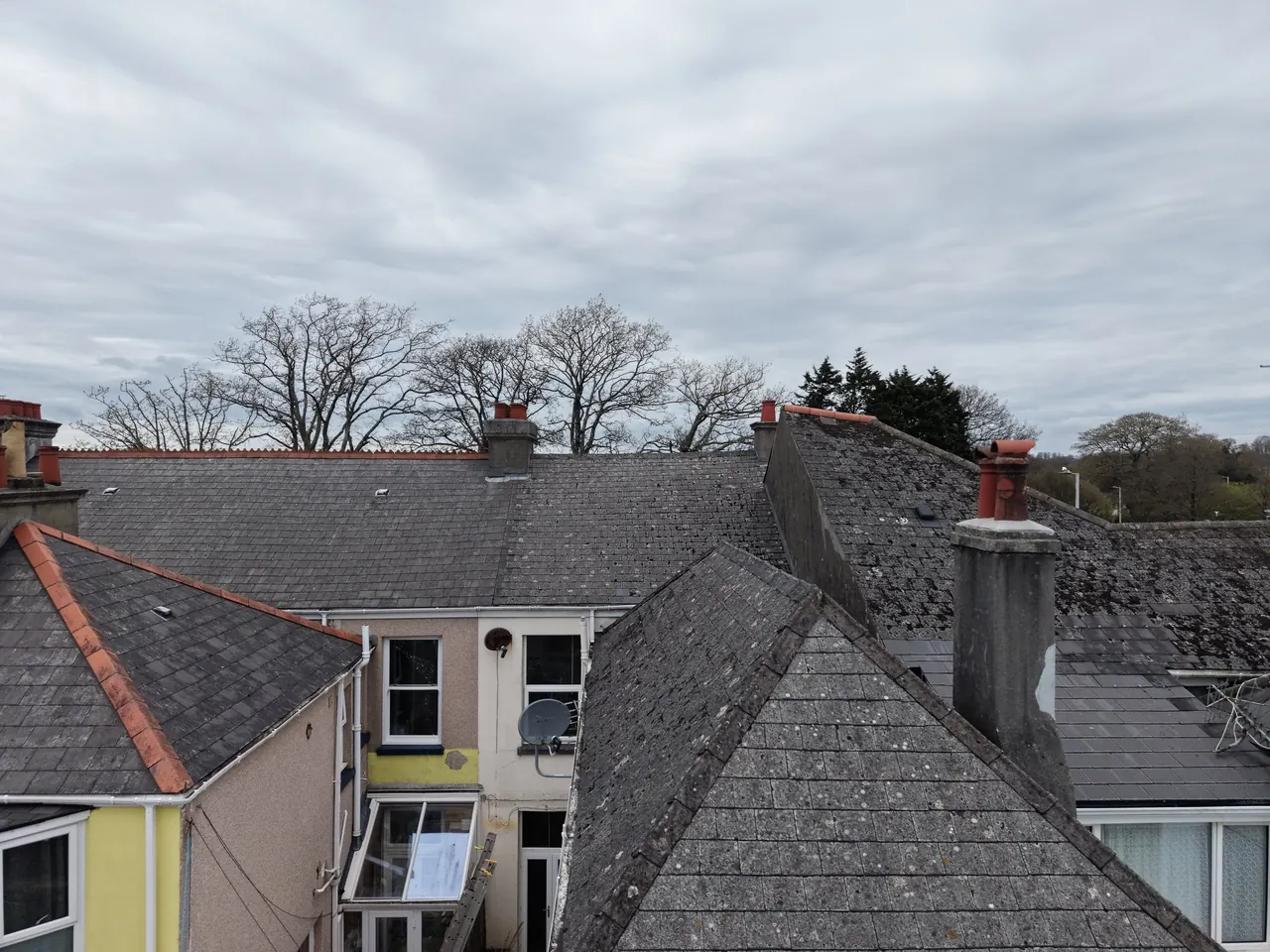
What we check
- Gutters: blockages, sagging runs, split joints and overflow staining
- Downpipe outlets and hoppers
- Lead-lined valleys and valley tiles
- Hidden gulleys between terraced roofs and back extensions
- Parapet and box gutters
- Fascias and soffits behind the gutter line
- Moss, leaves and silt built up in gutters and valleys
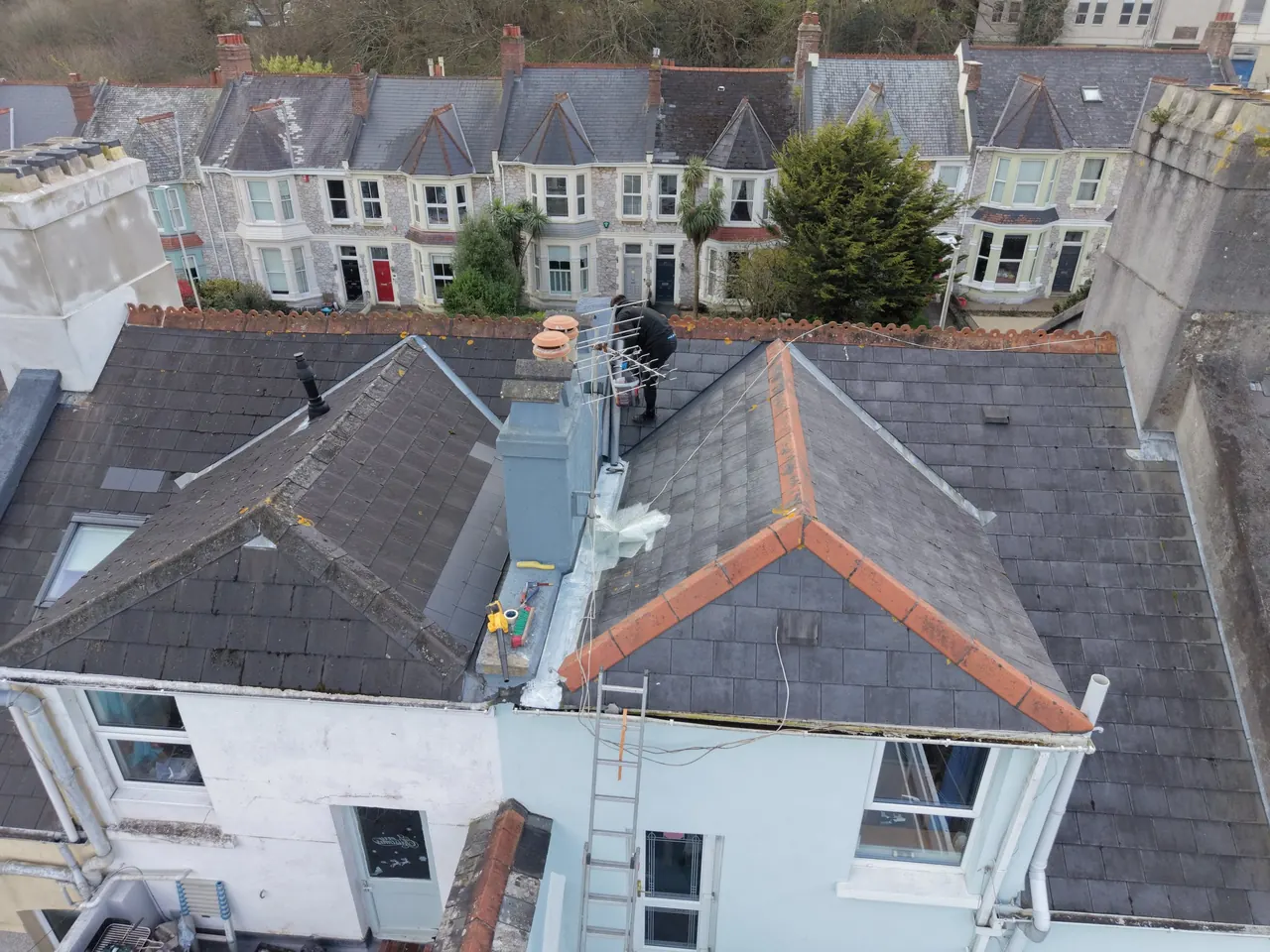
- Lead flashing where extension roofs meet the main wall
What you get
- Targeted (£75): selected photographs of the gutters or valleys you’re worried about, with a brief summary
- Full (£150): every visible gutter and valley, with photos, 4K video and an organised photographic summary
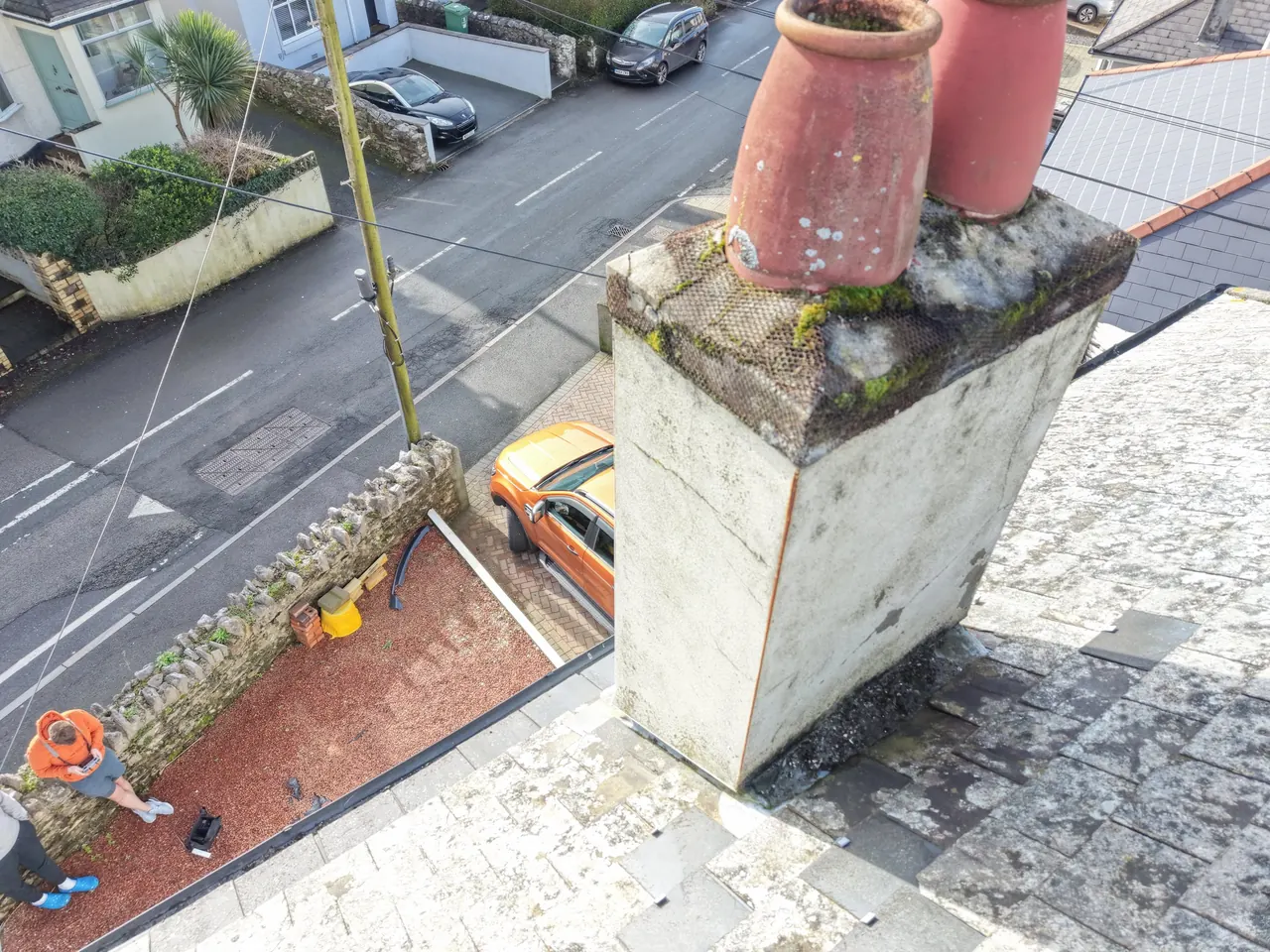
- Images clear enough for a gutter cleaner or roofer to see what the job involves before they arrive
When to book
- Water spills over the edge of the gutter in heavy rain
- Green streaks or damp patches appear on an outside wall
- There’s damp on a ceiling below a valley, or where an extension meets the house
- Plants are growing out of the gutter
- Late autumn, once the leaves have come down
Why do gutters and valleys matter so much?
A roof is designed to shed water, and gutters and valleys are where all of it ends up. A valley, where two roof slopes meet, collects rain from both sides and channels it down to the gutter. The gutter then carries it to the downpipe. When either one is blocked or damaged, a lot of water ends up in the wrong place, fast.
The results are familiar: rain pouring over the gutter edge and soaking the wall, damp patches inside, rotting fascia boards, or water backing up a valley and running under the slates. Because the water is concentrated, a small blockage can cause more damage than a missing slate.
The trouble is that gutters and valleys are some of the hardest parts of a roof to see. You can watch a gutter overflow from the garden, but you can’t see why. A drone looks straight down into them.
Why are Plymouth terraces so hard to check?
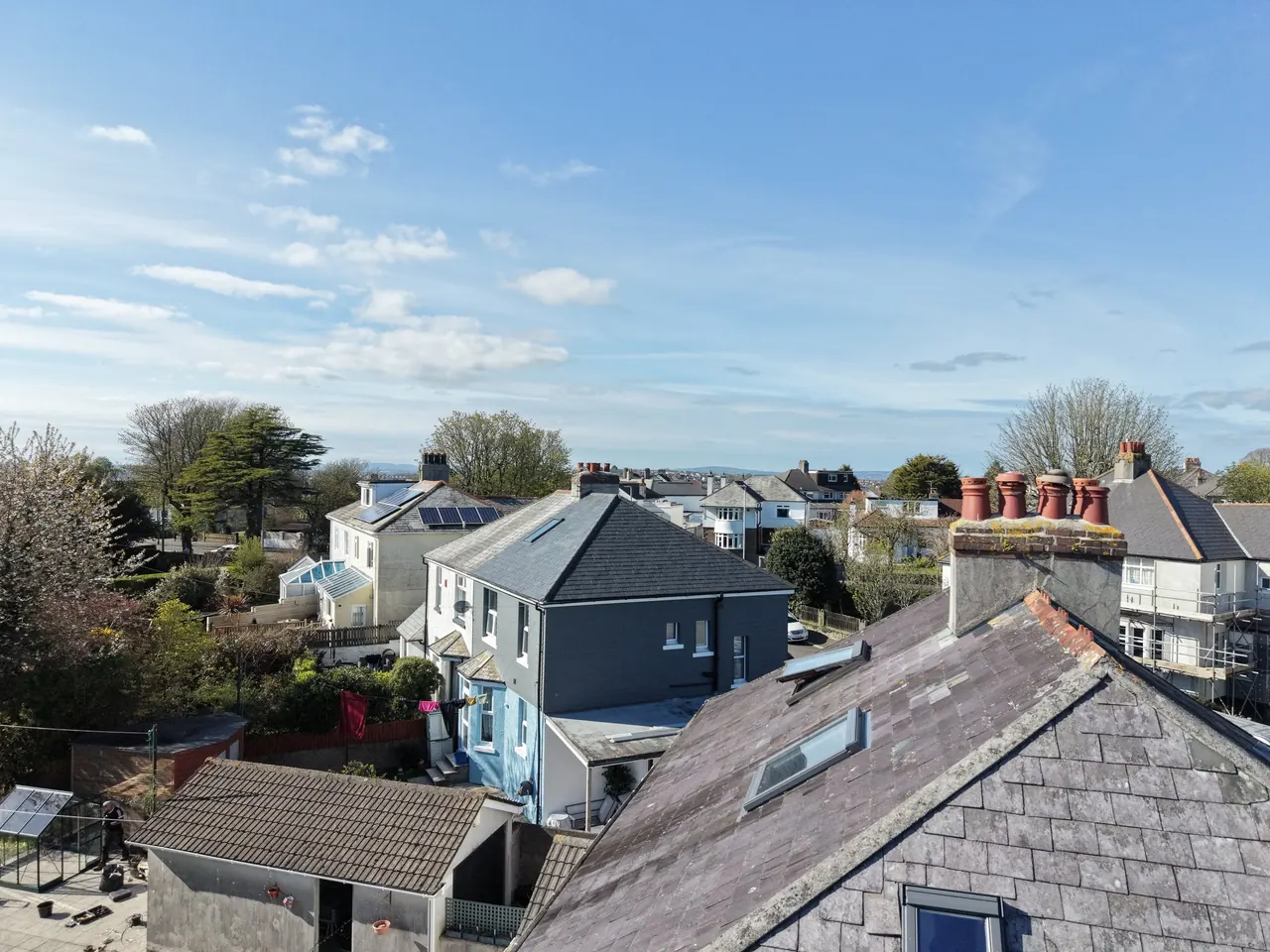
Many Plymouth streets are lined with Victorian and Edwardian terraces, and at the back they get complicated. Rear extensions, outriggers and later add-ons create valleys, box gutters and narrow gulleys between houses that you can’t see from the street, the garden, or even an upstairs window.
Those hidden channels are often where water collects: leaves and moss settle in them, lead linings split with age, and outlets get blocked. Because they sit between two roofs, it isn’t always clear whose they are until someone looks.
Our guide to common slate roof problems in Plymouth covers more of what we see. The drone gives you a clear view of the rear roofline, the gulleys between houses and the extension roofs, without anyone squeezing along a parapet or leaning off a ladder. You can see examples of rear rooflines on our recent inspections page.
Does it need clearing, or repairing?
That’s usually the question you want answered, and the photos often settle it. A gutter packed with leaves and moss needs clearing. A gutter with a split joint, a sagging run or a missing bracket needs repairing. A lead valley with a crack or a lifted edge needs a roofer.
Knowing which one you’re dealing with saves money. You don’t want to pay for a new gutter when it only needed emptying, or pay to clear a valley that will still leak because the lining has failed.
The Milehouse Road job is a good example. A significant leak above the staircase turned out to come from a lead-lined gulley. The drone images pinpointed it, and Tom Duggan Roofing replaced it. If water is already coming inside, our roof leak investigation looks at the gutters and valleys alongside everything else nearby.
How much does a gutter and valley inspection cost?
If you know where the problem is, such as one overflowing gutter or one valley above a damp ceiling, a Targeted Roof Inspection is £75. You get selected photos of that area and a brief summary of what’s visible.
If you want every gutter and valley checked, perhaps because you’ve just bought the house or nobody has looked for years, the Full Roof Visual Inspection is £150. It covers all safely visible slopes, chimneys, flashing, valleys and gutters, with photos and 4K video. Landlords with several properties can read about inspections for landlords and agents.
All prices are on our pricing page. We’re based in Plymouth and can talk you through which option fits in a free 15-minute call.
What a drone cannot tell you
This is a visual inspection only. We don’t clear gutters, test downpipes or check underground drainage. We can see whether a gutter or valley looks blocked or damaged, but we can’t see under lead linings, behind fascias or inside downpipes, and a gutter can look clear and still leak at a joint. Overhanging trees and tight gaps between buildings can limit the view, and we’ll note where they did. We only fly in dry, reasonably calm weather, so a booking can move if the wind picks up or it rains. We fly within UK Civil Aviation Authority rules; a few locations need extra permission or can’t be flown at all, and we’ll tell you before booking if yours is one of them. to confirm: CAA Operator ID and pilot qualifications to show here
Questions
Do you clean gutters as well?
No, we only inspect. That means the photos are an independent picture of what’s there, not a reason to sell you a clean. If the gutters just need emptying, any gutter-cleaning company can use our images to see the job in advance. If they need repairing, the same images help a roofer quote accurately before going up.
What’s the difference between a roof valley and a gulley?
A valley is the internal angle where two sloping roofs meet, lined with lead or special tiles, carrying water down to the gutter. A gulley usually means a narrow channel between two roofs or behind a parapet, often on terraces and extensions, also lined with lead. Both collect a lot of water, so both are common leak points when they block or the lining fails.
How often should gutters and valleys be checked?
Many roofers suggest at least once a year, ideally in late autumn after the leaves have fallen and before the winter rain. Houses with trees nearby, or terraces with hidden gulleys at the back, may need it more often. A drone check is a quick way to see whether clearing is needed, rather than paying for it every year on spec.
Can you check a valley or gulley that’s shared with next door?
Yes. The drone photographs the whole visible channel, including the parts that run along the boundary. That can help when the leak is in your house but the blockage or damage is on your neighbour’s side. Agreeing who arranges and pays for the repair is between you and them, but the photos give you both the same evidence.
Tell us about your roof
Send the address area and what you are worried about. We reply within one working day with options and a fixed price.
Prefer to talk it through? Book a free 15-minute call and we will help you choose the right inspection.