
See the whole of your roof without anyone climbing on it
We fly a drone over your roof and send you clear photos and 4K video of every slope we can safely see, so you know what’s up there before you spend money on repairs.
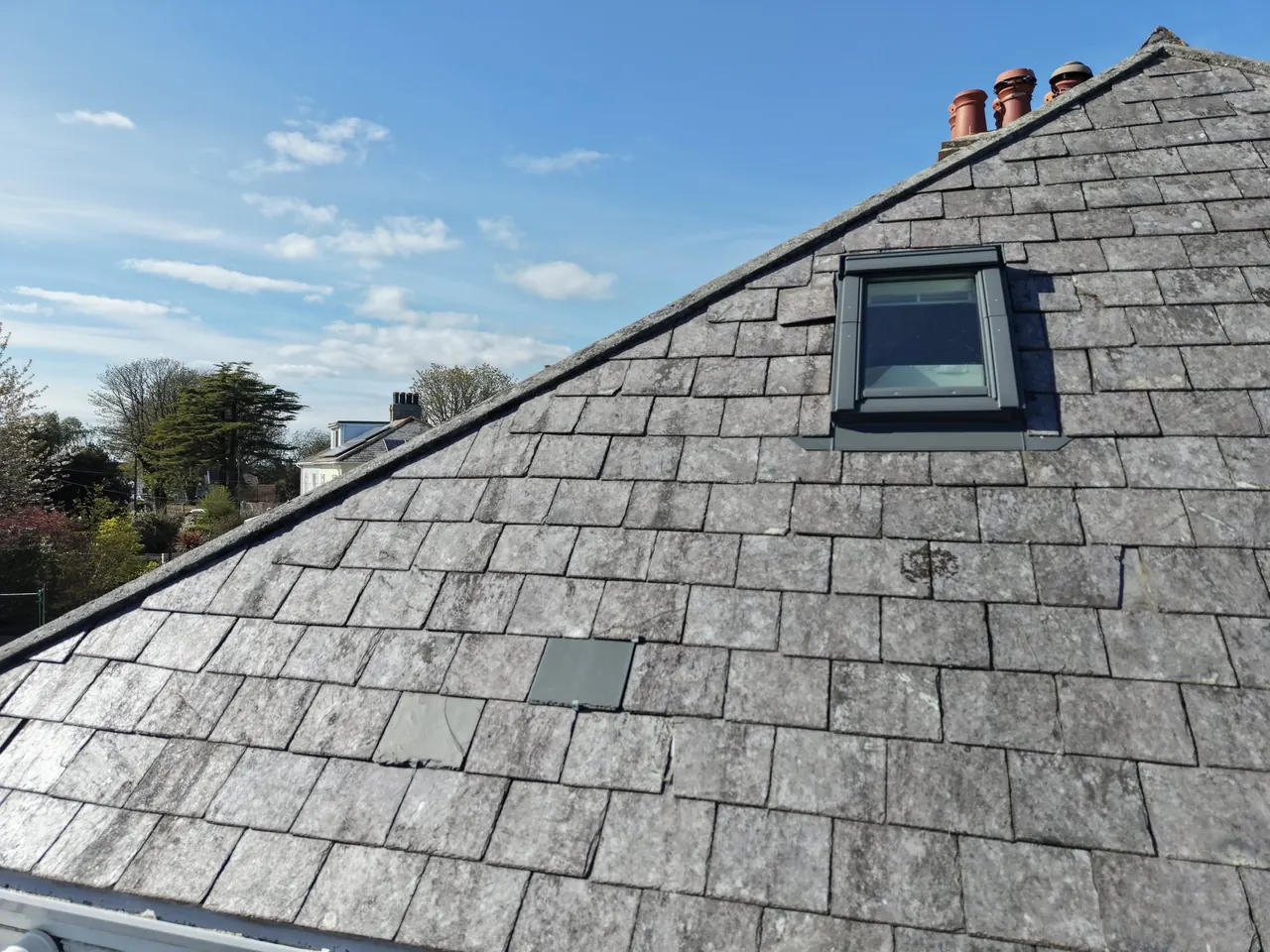
What we check
- Slates and tiles: slipped, cracked or missing
- Ridge and hip tiles, and the mortar bedding beneath them
- Valleys and lead flashing around chimneys, walls and dormers
- Chimney stacks, pots, flaunching and pointing
- Gutters, downpipe outlets, fascias and soffits
- Dormers, rooflights and skylights
- Solar panels and their visible fixings
- Moss, debris and plants taking hold on the roof
What you get
- Digital photographs of all safely accessible and visible roof slopes
- 4K video footage of the roof
- An organised photographic summary, grouped by area of the roof
- Images you can forward to a roofer so their quote is based on what’s really there
When to book
- You’ve found a slate or tile on the ground, or in the gutter
- Nobody has looked at the roof properly for years
- After a storm or a spell of strong south-westerly winds
- A roofer has quoted for work and you want to see the problem yourself
- You’re planning next year’s maintenance and want to budget for it
What does a drone roof inspection show you?
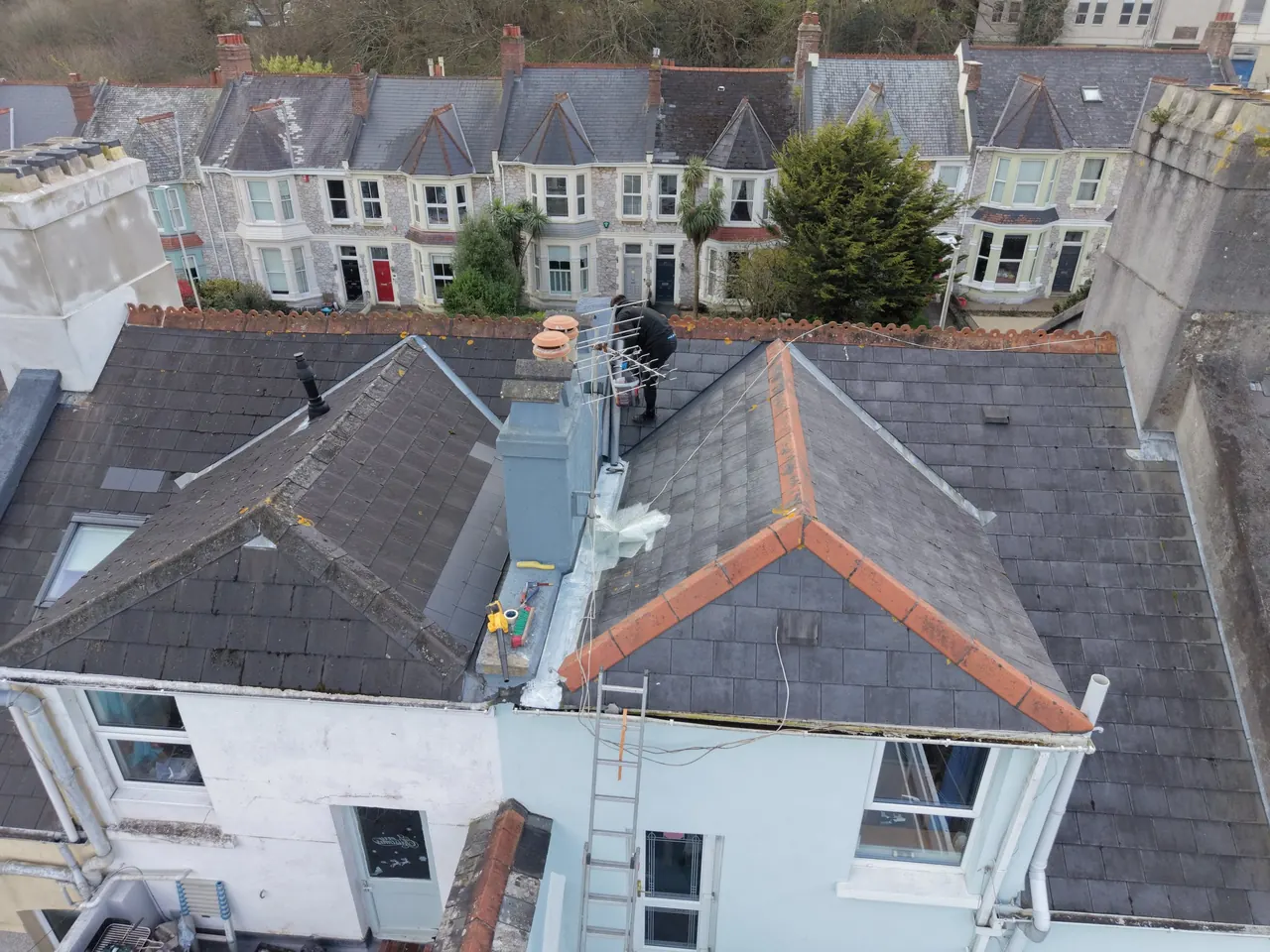
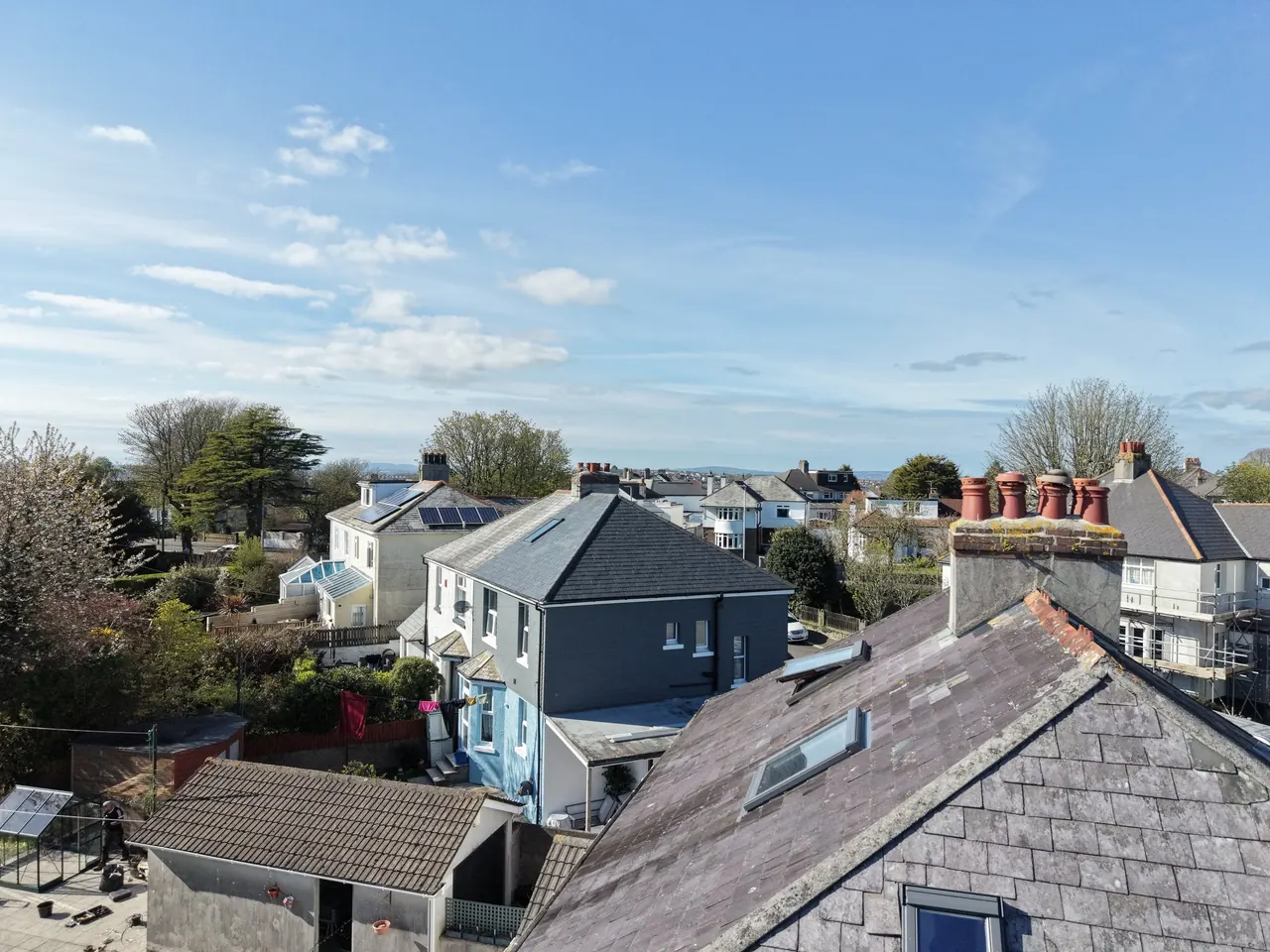
Most people have never seen the top of their own roof. From the pavement you get the front slope at a steep angle and very little else; the rear slopes, valleys, back gutters and the tops of chimney stacks stay out of sight. A drone changes that. We fly up to roof height and photograph each slope at close range, then take an overhead view of the whole roof so you can see how everything fits together.
On a recent job on Fircroft Road, the overhead view showed the full layout in one image: coverings, ridges, edges and how the roof met its neighbours. That kind of picture is useful long after the inspection, as a reference for every roofer you speak to.
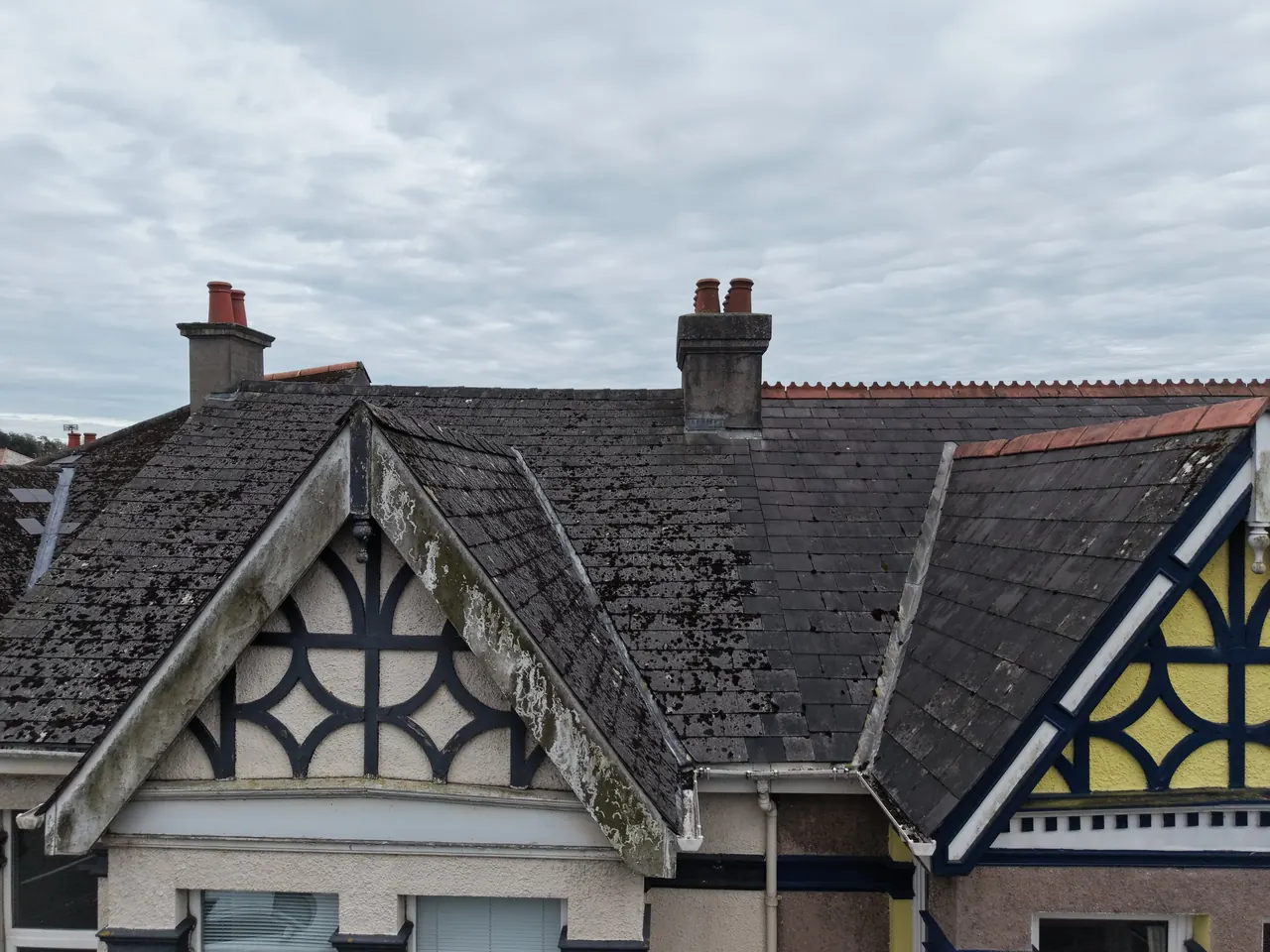
You see what we see. If a slate has slipped, a ridge tile has lost its mortar or a valley is full of moss, it’s there in the photos and the 4K video, not just in someone’s description of it.
Why use a drone instead of scaffolding or a ladder?
To look at a roof closely the traditional way, someone has to get up there. For anything beyond a quick look from a ladder, that usually means scaffolding, and for a typical two-storey house in the UK a roof scaffold typically costs somewhere between £500 and well over £1,000, depending on the house and how long it stays up. That’s a lot to spend just to find out whether you have a problem.
A drone inspection costs a fraction of that, nobody walks on fragile old slates, and there’s nothing bolted to your walls. It also gives you a permanent record: photos and video you can look at again, share, and compare with next year.
Scaffolding still has its place: when the repairs actually happen, your roofer will decide what access they need. We compare the two in more detail in drone vs scaffolding for roof inspections.
What did a full inspection find on Plymstock Road?
A homeowner on Plymstock Road was worried about missing tiles but couldn’t see enough from the ground to be sure. Rather than call out a roofer to quote on a guess, they booked a full roof inspection.
The drone photos confirmed the missing tiles and showed exactly where they were. That meant the repair could be targeted at the problem area instead of a general “we’ll go over the whole roof” job, and the owner could decide how much to spend on maintenance with the evidence in front of them.
That’s the point of a full inspection: not to find work, but to replace guesswork with pictures. Sometimes the photos show a problem, sometimes they show a roof that’s in better shape than you feared. Either way you know. You can see more examples on our recent inspections page.
Which package do I need?
The Full Roof Visual Inspection (£150) covers all safely accessible and visible roof slopes, chimneys, flashing, valleys and gutters, with photos, 4K video and an organised photographic summary. It’s the right choice if you want to know the overall condition of the roof.
If you already know where the worry is, such as one chimney, one gulley or one patch of missing tiles, the Targeted Roof Inspection (£75) is usually enough. See our chimney inspections and roof leak investigations.
If you need something to hand to someone else, such as a buyer, a landlord, an insurer or a contractor, the Roof Inspection & Annotated Report (£200) adds a PDF with labelled photos and the locations of any visible concerns. All three are compared on our pricing page, and we cover homes across Plymouth.
What a drone cannot tell you
This is a visual inspection, not a structural survey. We photograph what can be seen from the air; we can’t see under slates or tiles, inside the roof space, or behind flashing, and we don’t take moisture readings. Some slopes may be partly hidden by trees, neighbouring buildings or the shape of the roof, and we’ll say where coverage was limited. We only fly in dry, reasonably calm weather, so a booking can move if the wind picks up or it rains. We fly within UK Civil Aviation Authority rules; a few locations need extra permission or can’t be flown at all, and we’ll tell you before booking if yours is one of them. to confirm: CAA Operator ID and pilot qualifications to show here
Questions
Is a drone roof inspection the same as a roof survey?
No. A drone roof inspection is a visual check: we photograph and film the outside of the roof and point out what we can see. A building survey by a chartered surveyor looks at the whole property, including the roof structure from inside, and gives professional opinions on condition. The two work well together, but a drone inspection doesn’t replace a survey.
Can a drone inspection find every problem with my roof?
It finds problems you can see from above: missing or slipped slates, loose ridge tiles, failed lead, cracked flaunching, blocked valleys. It can’t see what’s under the coverings, such as rotten battens or torn felt, or inside the loft. If the photos suggest a hidden problem, we’ll say so and suggest you ask a roofer to look more closely.
What happens if the inspection finds damage?
You get the photos and can share them with any roofer you choose, so the quote is based on the real problem. We only inspect; we don’t carry out repairs, so there’s nothing for us to upsell. If you’d like a recommendation, we have referred clients to Tom Duggan Roofing, who carried out the repair on our Milehouse Road job.
Will the drone film my neighbours’ property?
We focus on your roof, but on terraced and semi-detached houses the neighbouring roofs will appear at the edges of some shots because they’re joined to yours. We plan the flight to keep to the job, follow the Civil Aviation Authority’s Drone Code on privacy, and don’t publish identifiable images of anyone’s home without permission.
What if the weather is bad on the day?
We only fly in dry, reasonably calm conditions, because rain on the lens and gusty wind both spoil the photos and make flying less safe. If the forecast turns, we’ll get in touch and agree a new time with you. Plymouth weather changes quickly, so it’s worth having a second date in mind.
Tell us about your roof
Send the address area and what you are worried about. We reply within one working day with options and a fixed price.
Prefer to talk it through? Book a free 15-minute call and we will help you choose the right inspection.