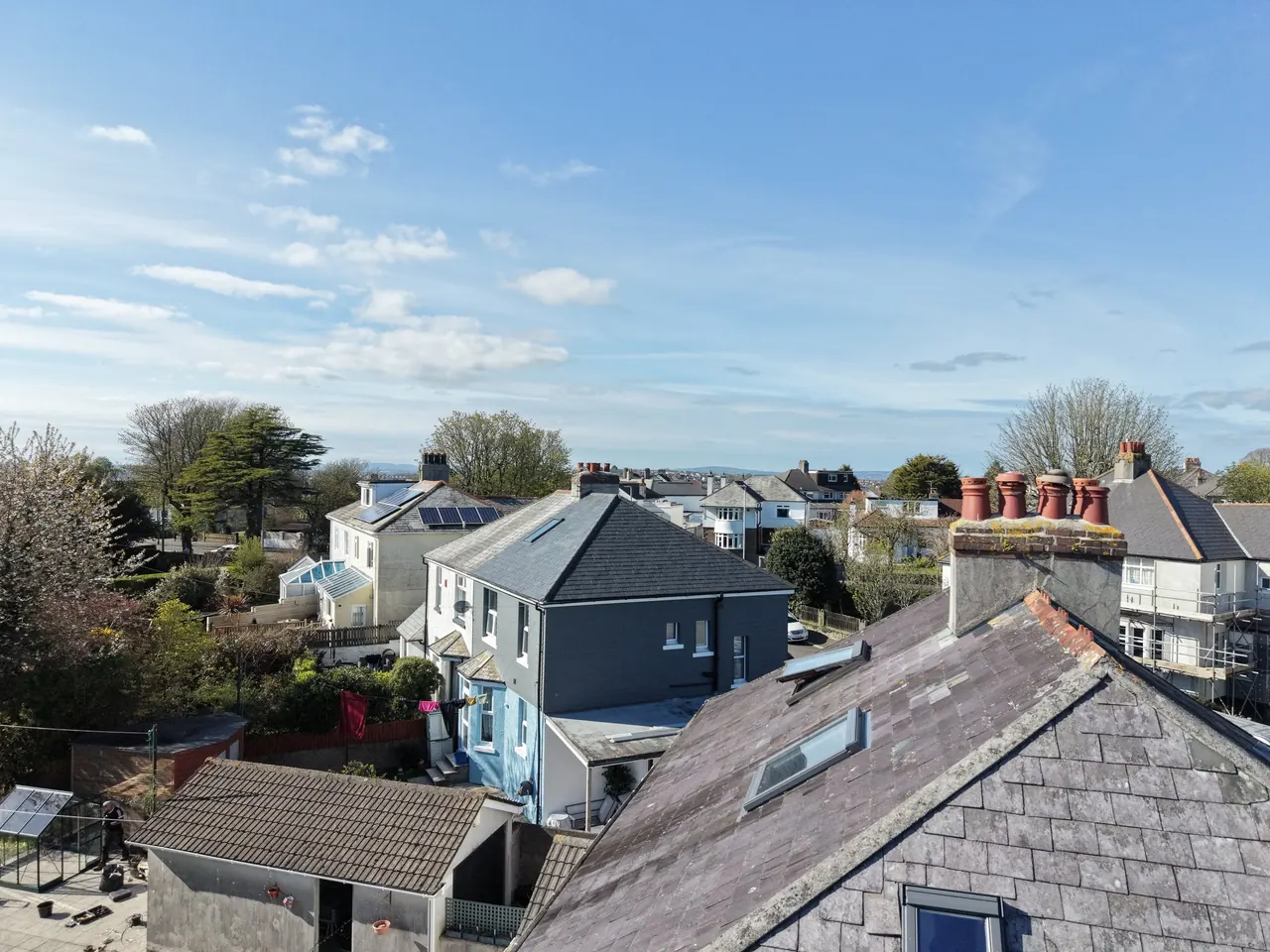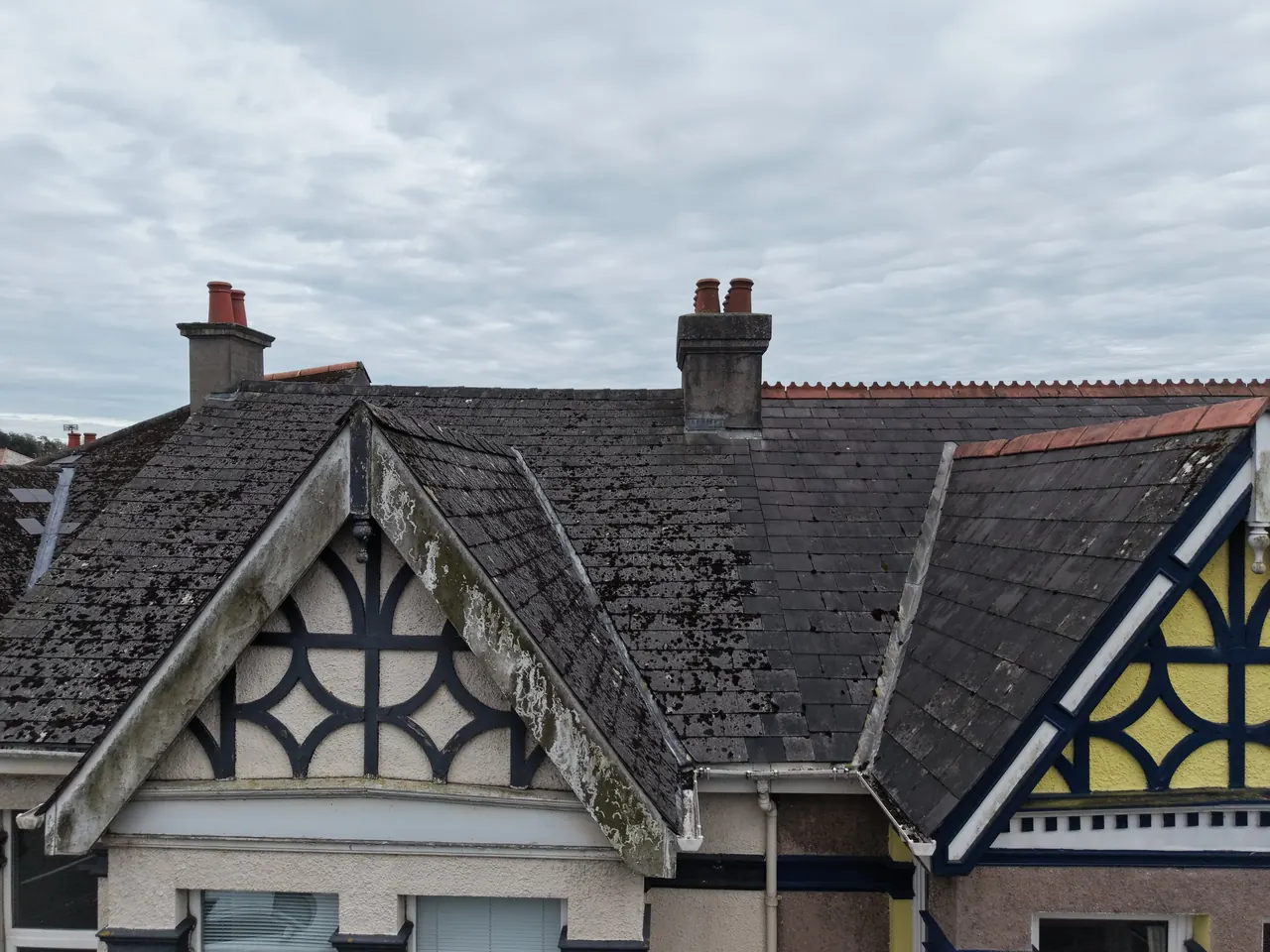
Water rarely drips straight down. It runs along felt, battens and rafters, so the stain can be well away from where it gets in. On Plymouth roofs, check chimney flashing, valleys and lead gulleys, slipped slates, ridge mortar, gutters and rooflights. Trace the wet trail uphill in the loft, scan the roof with binoculars, then get a close-up view.
Key takeaways
- The stain is rarely under the hole: water tracks along felt and rafters first.
- Joints fail first: chimney flashing, valleys, lead gulleys, ridge mortar and gutters.
- A leak follows the rain; condensation appears on cold mornings, even in dry weather.
- Never climb onto a wet or damaged slate roof; use the loft, a torch and binoculars.
- Take dated photos before any repair: insurers expect evidence and a maintained roof.
A brown ring on the ceiling tells you water is getting in, but rarely where. The entry point can be well away from the stain, sometimes on a different slope. This guide explains why, which parts of a Plymouth roof usually fail, what you can safely check yourself and when to get a closer look.
Why is the stain rarely directly under the leak?
Because water rarely falls straight down. Once it gets past a slate or a joint, it runs along the roofing felt, the battens and the rafters until it finds a low point or a gap, and only then drips onto the ceiling.
Rain that gets under a cracked slate near the ridge can travel down the felt and along a rafter before it lands on the plaster. A split in a lead valley does the same. That is why patching the slates directly above a stain so often fails.
The Energy Saving Trust calls this penetrating damp: water coming in from outside, often through faulty guttering or roofing, which gets worse when it rains and usually shows as a concentrated damp patch.
What are the most common causes of roof leaks in Plymouth homes?
Leaks usually start at joints and edges rather than in the middle of a sound slope: chimneys, valleys, gulleys, the ridge and gutters. Which? advises paying particular attention to the ridge, valleys and chimney. Plymouth gets around 1,038 mm of rain a year, with 1 mm or more falling on about 149 days (Met Office averages for Plymouth Mountbatten, 1991-2020), so any weak joint gets tested often.
Chimney flashing and flaunching
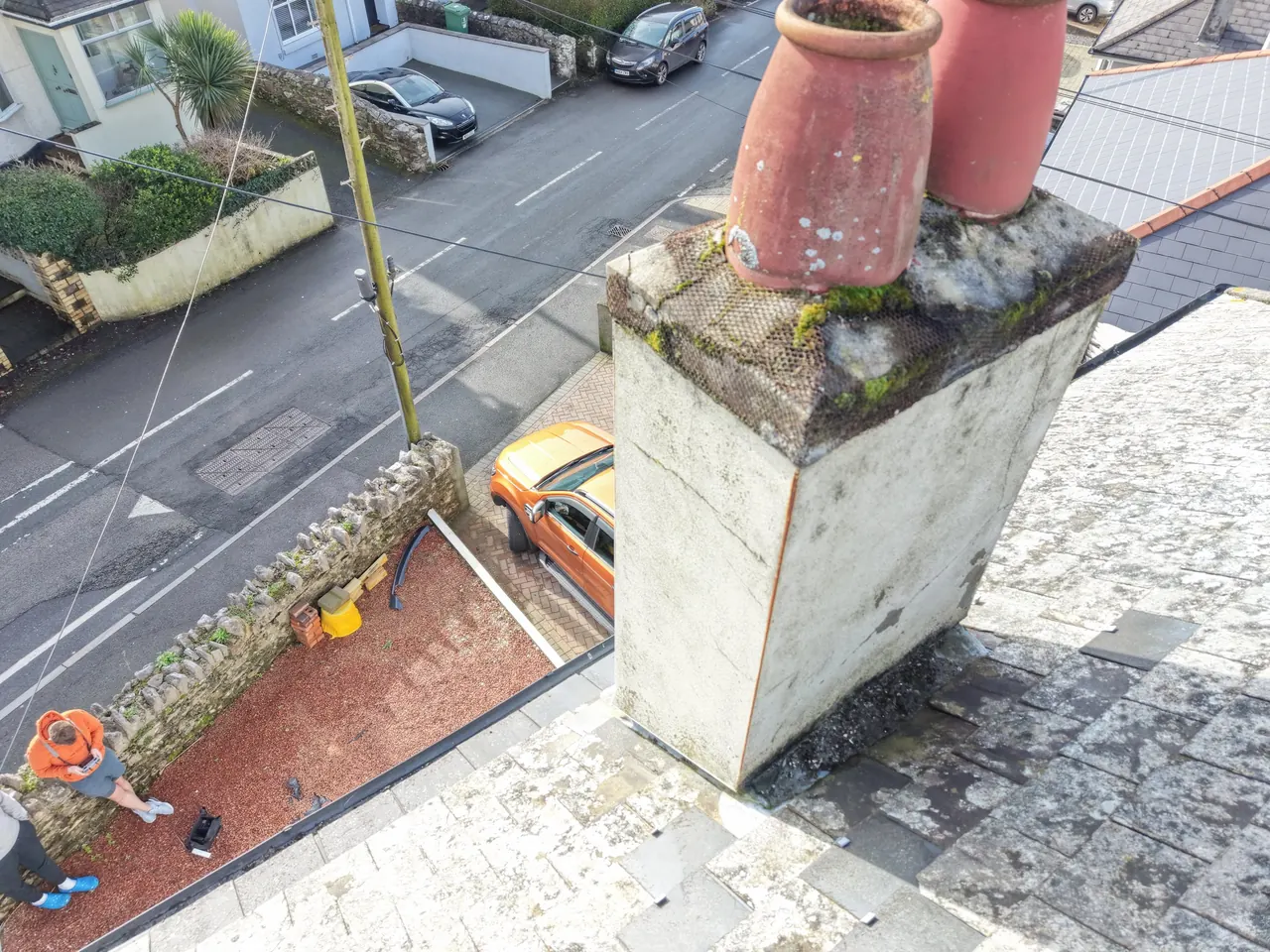
Flashing is the lead sealing the joint between the stack and the slates; flaunching is the mortar cap around the pots. Both crack and loosen with age, and the water often shows on a chimney breast. On one Plymouth chimney leak we inspected, the drone showed missing flashing and visible masonry defects: clear entry points that could not be seen from the street. More on our chimney and flashing inspections.
Valleys and lead gulleys
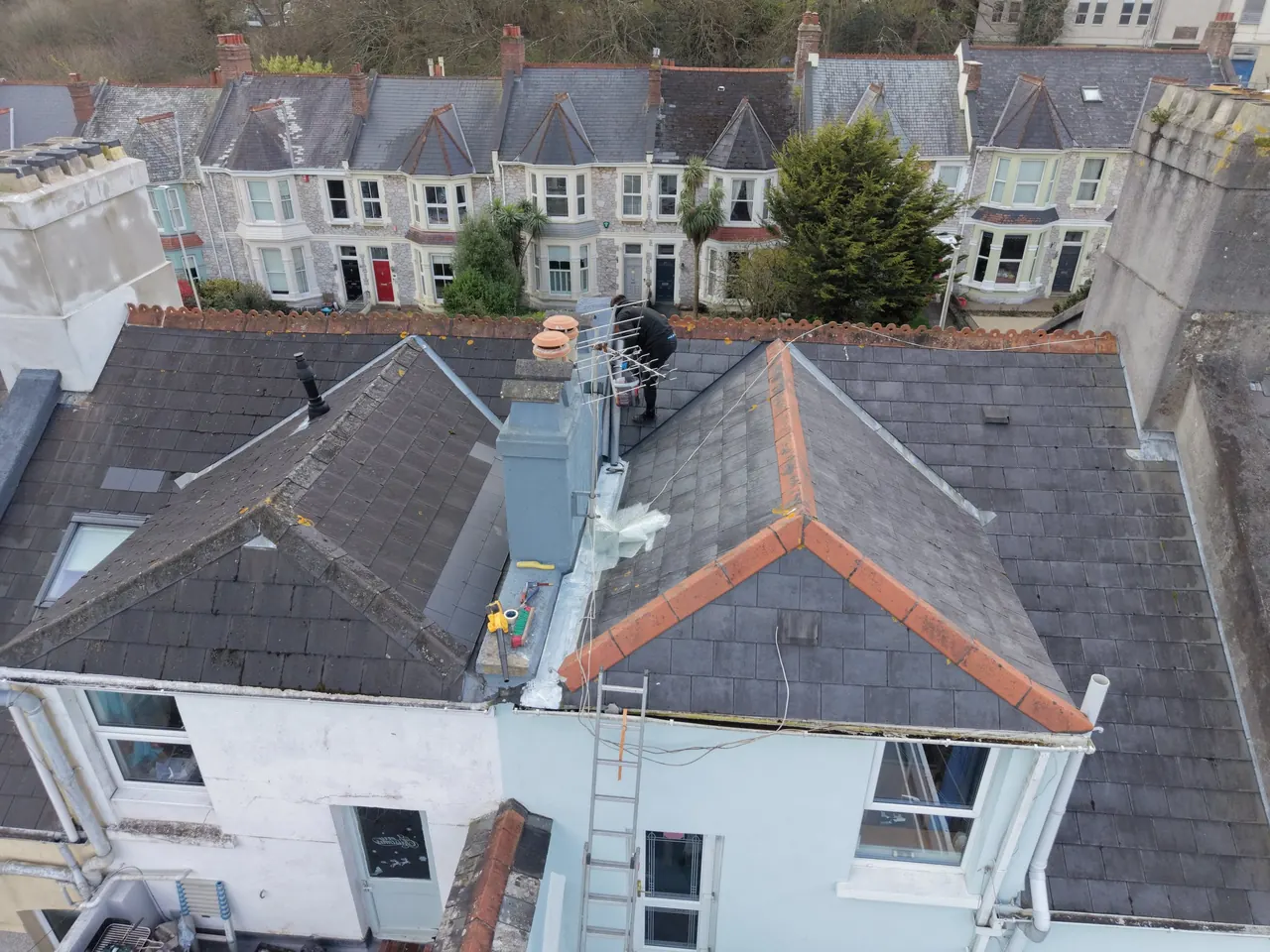
A valley is the channel where two slopes meet. Many Plymouth terraces also have lead-lined gulleys between roofs or behind parapets. Lead splits with age, and leaves and moss block the channel so water backs up under the slates. On Milehouse Road, a significant leak above a staircase was traced to a lead-lined gulley overhead. Once the drone pinpointed it, Tom Duggan Roofing replaced the gulley and the leak stopped.
Slipped, cracked or missing slates
When the nails corrode, slates slide out of place. Which? advises fixing a gap quickly, before water reaches the felt and the wind lifts the slates next to it. You can read more in our guide to slate roof problems in Plymouth.
Ridge and hip mortar
Ridge tiles are usually bedded in mortar. When it cracks, wind drives rain in sideways. Pieces of mortar in the gutter are a clue.
Blocked gutters and overflowing downpipes
A blocked gutter overflows onto the wall and can push water under the bottom row of slates, which looks like a leak at the top of an outside wall. See our gutter and valley inspections.
Rooflights and Velux-type windows
The flashing around a rooflight can fail, and so can its seals. A drip only around the frame is a strong hint.
Condensation that looks like a leak
Not every wet loft is a leak. The Energy Saving Trust says a household produces up to 100 litres of moisture a week, and without ventilation it settles on cold surfaces: in a loft, beads of water under the felt and rusty nail tips across the whole roof.
| What you notice | More likely a leak | More likely condensation |
|---|---|---|
| When it appears | During or soon after rain, often in wind from one direction | Cold mornings, including dry weather |
| Where it appears | One defined patch that grows | Droplets across the underside of the felt or on nails |
| Timber | Water trails or staining along one rafter | General dampness, mould on many timbers |
| Ceiling | Brown ring with a hard edge | Mould in corners, misted windows below |
How can I check for a roof leak from inside?
Go into the loft on a wet day with a good torch and follow the water uphill. Look first above the stain, then work up the slope and towards the chimney or valley.
- Stay safe. Step only on joists or boards, never on the plasterboard between them, and keep clear of wet wiring.
- Find the wet point above the stain. Feel the insulation and the timber.
- Trace the trail upwards. Look for dark streaks or tide marks along rafters and battens. The highest wet point is usually nearest the entry point.
- Check the usual suspects. The chimney breast, the line of a valley and the frame of a rooflight.
- Look for daylight. With the loft light off, any pinpoint of light through the slates is worth noting. Which? advises calling a professional as soon as possible if you can see daylight through your roof.
- Take photos and note the weather. Record the date, how heavy the rain was and the wind direction. A pattern often appears.
What can I check from the ground?
Binoculars and a walk around the house show more than you expect. Stand back across the street and, if you can, look at the rear from the garden or lane.
- Slates that sit out of line, look lighter than their neighbours or have obvious gaps
- Pieces of slate or mortar on the ground or in the gutter
- Lead flashing around the chimney that has lifted, torn or gone missing
- Cracked mortar around the chimney pots and along the ridge
- Gutters with plants growing in them, sagging sections or water marks down the wall
- Moss building up in valleys
Do not climb onto the roof or lean ladders against old slates. Slate is slippery when wet and breaks underfoot. And the back of the chimney, the inside of a valley and gulleys between terraces are usually the parts you cannot see from the ground at all.
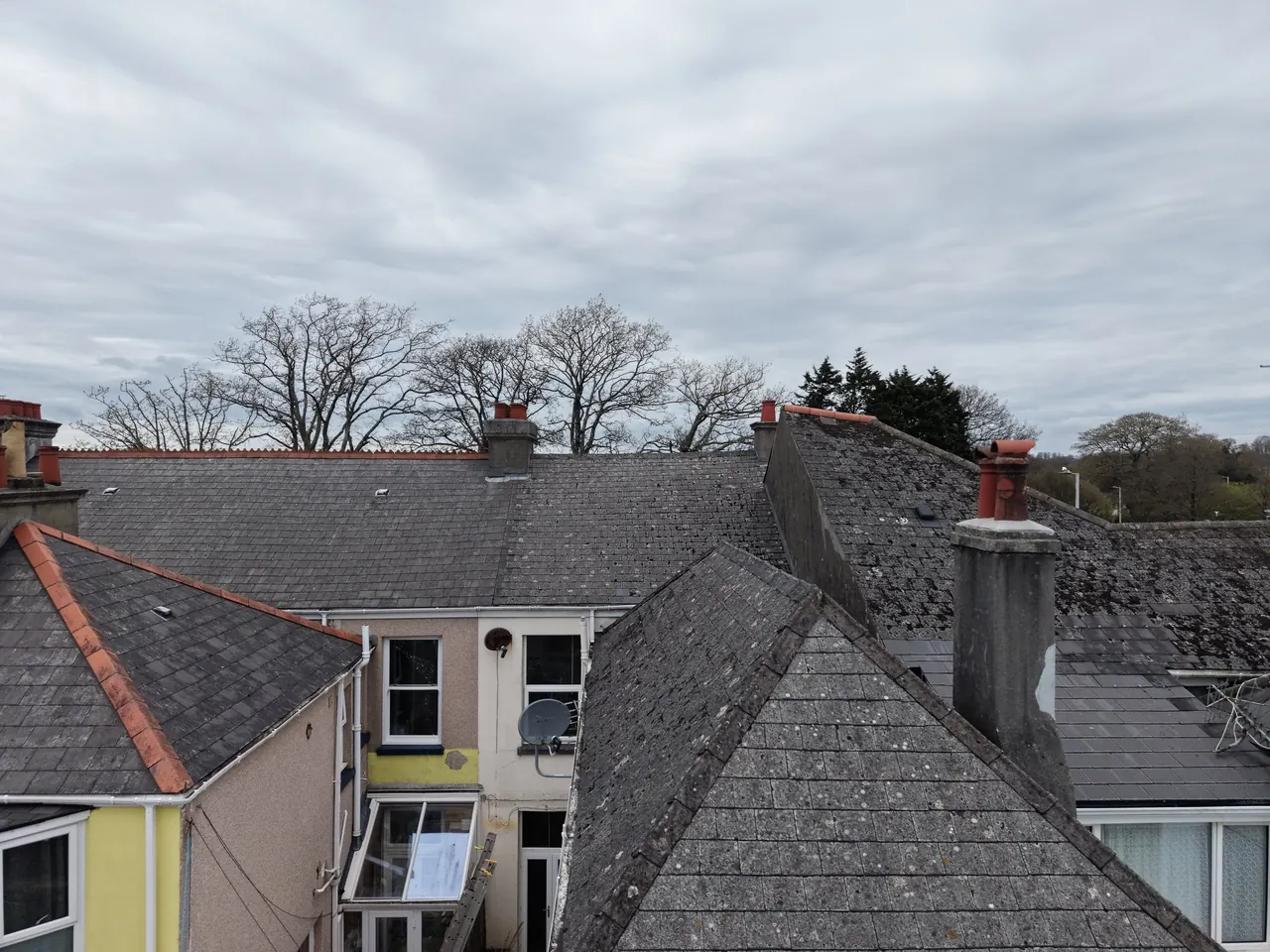
Should I get a drone inspection or call a roofer?
Call a roofer when the cause is obvious and the repair is straightforward. Book a drone inspection when you do not know where the water is getting in, when you have already paid for a repair that did not work, or when you want independent evidence before agreeing to a large quote.
A drone gives you close-up photos and 4K video of the slopes, chimney, flashing, valleys and gutters without scaffolding or anyone on the slates. For one suspect area, such as a chimney or a gulley, our Targeted Roof Inspection is £75. A Full Roof Visual Inspection is £150, and the Roof Inspection & Annotated Report, with labelled photos marking the locations of visible concerns, is £200. Our roof leak investigation page explains how a visit works.
The limits matter. A drone inspection is visual: it cannot see under slates or inside timber, and some leaks need a roofer to lift slates to confirm the route. What the photos do is narrow the search, so the roofer arrives knowing where to look. Flights depend on weather and airspace permissions.
Which? recommends getting quotes from at least three roofers and being wary of cash or VAT-free deals. The NFRC (National Federation of Roofing Contractors) says its member contractors must pass an inspection before joining and are inspected every three years after that. Photos make quotes easier to compare, because every roofer prices the same defect. For a check after the repair, see our before and after roof work checks.
What should I do right now if the roof is leaking?
Contain the water, make the house safe and start recording. The repair can wait for a dry day.
- Put a bucket under the drip and protect floors and furniture.
- If water is near light fittings, sockets or the consumer unit, switch off the affected circuit if it is safe to do so and get an electrician to check it.
- If the ceiling is sagging or bulging with water, keep people out from underneath it. Wet plasterboard can come down without warning.
- Do not go on the roof. A roofer can make a temporary repair once wind and rain allow.
What photos do I need for an insurance claim?
Take dated photos and short videos of every sign of damage, inside and out, before anything is cleaned up or repaired. Which? notes that photos or a short video can help if there is any dispute.
- The ceiling stain, photographed again over the following days if it grows
- Wet timber, insulation and felt in the loft
- Damaged belongings, which you should keep until the insurer says otherwise
- Visible roof damage, such as missing slates or torn flashing
- Receipts for emergency costs
Which? also warns that claims are often turned down where a home has not been kept in good repair, especially for storm damage to a roof, and suggests having the roof inspected every few years and keeping proof. Which? says you typically have around 180 days (about six months) to claim, but the sooner the better. A dated drone report records both the roof's condition and the damage. Our roof checklist after a storm covers what to look at once the weather clears.
How much does fixing a roof leak usually cost?
Small repairs often cost a few hundred pounds; access pushes the price up. A November 2025 Which? survey of 11 Trusted Traders found these typical prices (labour and materials, excluding VAT).
| Job | Typical price (Which?) |
|---|---|
| Replace one to six broken or missing standard tiles | £75-£400 |
| Replace a single ridge tile | £80-£300 |
| Clear all gutters, front and back | £75-£350 |
Chimney, lead and valley work varies more, depending on the job and whether scaffolding is needed, so ask for that in writing. Finding the right spot first is the cheapest way to avoid paying twice. See local examples on our recent inspections page, and more on what we cover in Plymouth.
Next step
If you have a stain and no clear cause, book a free 15-minute call. Tell us where the water shows and when, and we will tell you honestly whether a drone inspection will help or a roofer is the better first call.
Frequently asked questions
Why does my roof only leak when it's windy?
Wind drives rain sideways and upwards, so it can get past joints that cope with rain falling straight down. Loose ridge mortar, lifted flashing and slates that have slipped slightly are typical culprits. Note the wind direction each time the leak appears. If it only happens in a south-westerly, for example, the problem is most likely on the side of the roof facing that way.
Can I wait until spring to fix a small roof leak?
It is not a good idea. Even a slow drip soaks insulation, which then stops working, and keeps timber damp, which can lead to rot. Ceilings can also come down once plasterboard is saturated. Insurers expect you to act promptly to limit damage. If a full repair has to wait for better weather, ask a roofer for a temporary repair in the meantime.
Can a drone see a leak inside the roof?
No. A drone inspection is a visual check of the outside of the roof. It shows defects such as missing flashing, split lead or slipped slates in close-up, but it cannot see under slates or into timbers. It works best alongside your own loft check: the loft shows where the water arrives, and the drone photos show what is wrong on the outside above it.
What if the leak is coming from my neighbour's roof or a shared gulley?
On terraces this is common, because chimneys, gulleys and valleys are often shared. Talk to your neighbour early and share your photos, since the repair usually has to be done from both sides. Who pays depends on your title deeds and the circumstances, so check with your solicitor or insurer if there is a disagreement. Clear photos showing where the defect is make that conversation much easier.