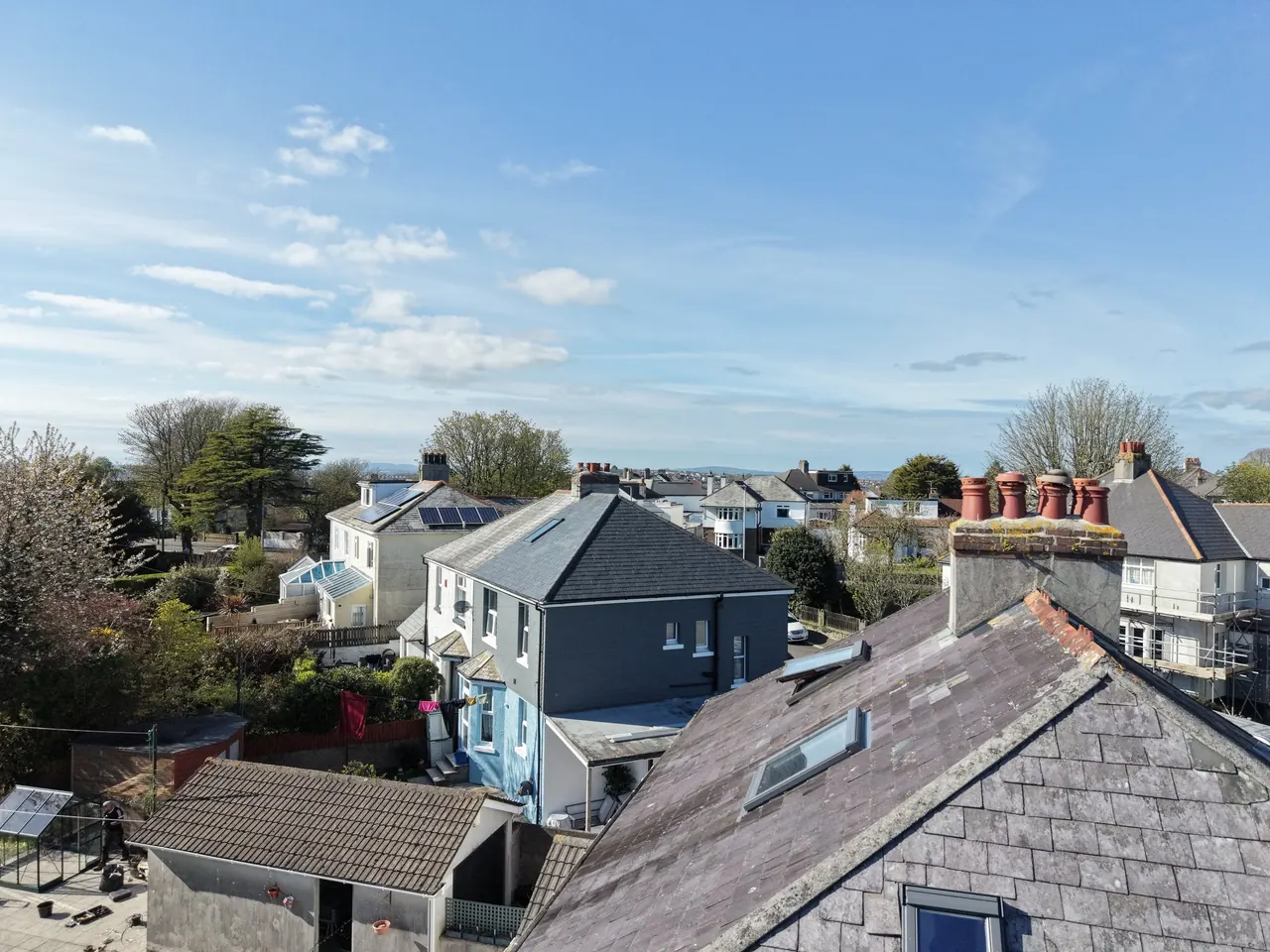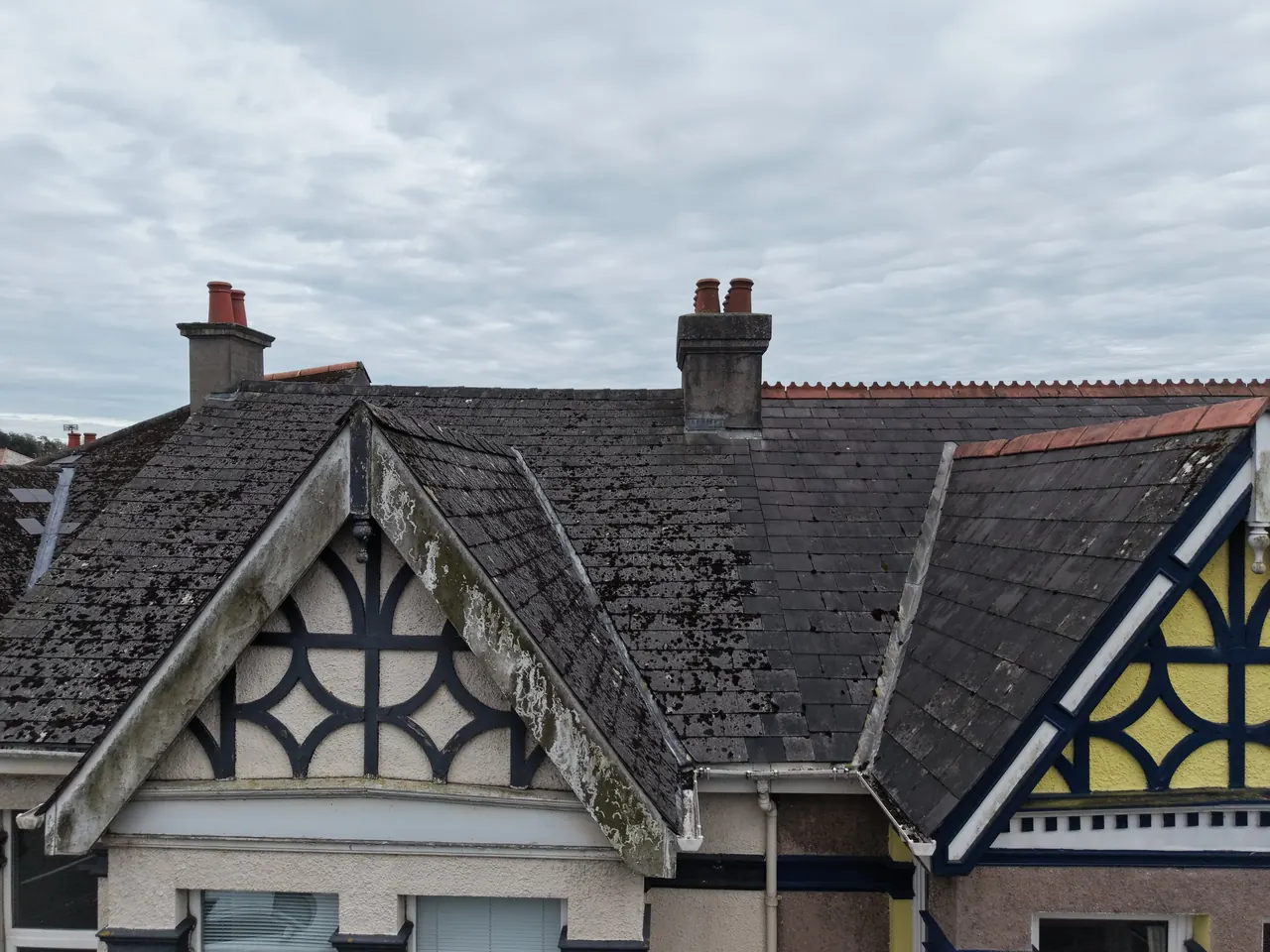
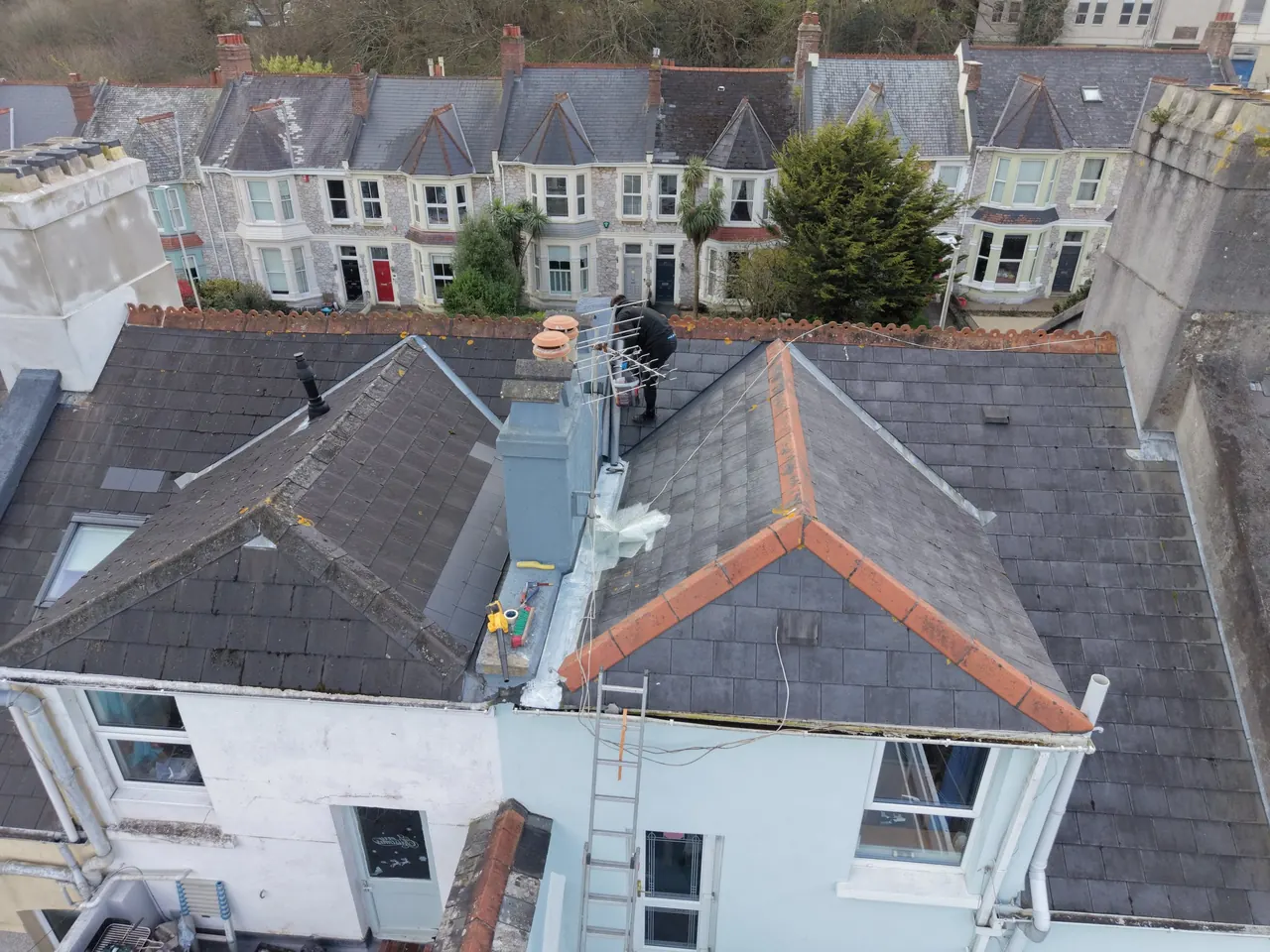
Landlords in England must keep the roof, chimneys, gutters and downpipes of a let home in repair under section 11 of the Landlord and Tenant Act 1985. Check gutters each autumn, the whole roof before winter and after storms, review in spring, and keep dated photos at every change of tenant.
Key takeaways
- Section 11 of the Landlord and Tenant Act 1985 makes landlords responsible for the structure and exterior, including gutters and external pipes, for tenancies under seven years.
- The new Decent Homes Standard will apply to private rented homes from 2035; roof structure, roof covering and chimneys are key components.
- Awaab's Law does not yet apply to private landlords: the consultation closes on 18 December 2026 and the earliest suggested start is 2027.
- Four routine checks a year (autumn gutters, pre-winter, post-storm, spring) plus a dated photo record between tenancies cover most roof risks.
- A drone inspection is a visual check of the outside; damp inside the home still needs an inspection by an appropriately qualified contractor.
Short answer: landlords in England must keep the roof, chimneys, gutters and downpipes of a let home in repair, and the bar is rising. Check gutters every autumn, the whole roof before winter, the damaged area after any serious storm, and keep a dated photo record at each change of tenant. Below: the law as of November 2026, a yearly calendar, and how to do it without scaffolding.
What roof repairs is a landlord legally responsible for?
For most residential tenancies, the landlord is responsible for the structure and exterior, including the roof, chimneys, gutters and downpipes. Two laws do most of the work.
Landlord and Tenant Act 1985, section 11
Section 11, read with section 13, implies a repairing covenant into most leases of a dwelling granted for less than seven years, which covers almost every assured tenancy. The landlord must ‘keep in repair the structure and exterior of the dwelling-house (including drains, gutters and external pipes)’. You cannot contract out of it in the tenancy agreement.
Section 11(6) also lets you, or someone you authorise in writing, enter at reasonable times on 24 hours' written notice to view the state of repair. A drone check does not involve entering the home, but the same courtesy applies: tell the tenant when we are coming.
Homes (Fitness for Human Habitation) Act 2018
In force since 20 March 2019, and for all periodic tenancies since 20 March 2020, this Act requires a rented home to be fit for human habitation throughout the tenancy and lets tenants go to court if it is not. Courts consider, among other things, whether the building is neglected and in bad condition, whether there is a serious damp problem, and the 29 hazards in the Housing Health and Safety Rating System (HHSRS). A long-running roof leak can touch all three.
What changes for landlords under the Renters' Rights Act 2025?
The Act received Royal Assent on 27 October 2025 and is arriving in three phases. Tenancy reform came first; the standards that matter most for roofs come last.
- Phase 1, 1 May 2026: the new tenancy regime, including the end of section 21 evictions, came into force.
- Phase 2, from late 2026: the landlord register. The government's Register your rental property service opens region by region from 15 December 2026. For the South West, the registration window is 15 August to 14 November 2027, with an annual fee of £65 per property. Membership of a new Private Rented Sector Landlord Ombudsman is expected to become mandatory in 2028.
- Phase 3: Awaab's Law and the Decent Homes Standard for private rented homes (see below).
When does the Decent Homes Standard apply to private rented homes?
The government's policy statement, published on 28 January 2026, says the new Decent Homes Standard will apply from 2035 to both social and private rented homes. Under it, a home fails if a single key building component is not in a reasonable state of repair, or if two or more other components are not.
Roofs feature heavily. The roof structure, the roof covering and chimneys are all listed as key components. The government's examples of disrepair include ‘significant number of missing, broken or slipped slates or tiles; broken or slipped ridge tiles and hips; missing verges…’ and, for chimneys, ‘broken, unseated or unsafe pots; leaning stacks; unsafe chimney heads; decayed brick/masonry structure; and defective pointing’. Rainwater goods (gutters and downpipes) are an other component, with examples such as cracked or detached gutters and blockages restricting drainage.
2035 sounds distant, but the policy statement says landlords should not wait, and existing duties under the Housing Act 2004 and the 2018 Act apply now. It also plans civil penalties of up to £7,000 where a landlord has failed to take reasonably practicable steps, intended, subject to secondary legislation, to come into force before the full standard.
Does Awaab's Law apply to private landlords yet?
Not yet. Awaab's Law applies to social housing now, and the government is consulting on how and when to extend it to private tenancies. The earliest date it suggests is 2027.
In social housing, Phase 1 began on 27 October 2025, covering damp and mould and emergency hazards. Social landlords must investigate a potential significant hazard within 10 working days, make the home safe within 5 working days of the investigation ending, and deal with emergencies within 24 hours.
For private rented homes, the consultation Extending Awaab's Law to private rented tenancies and to licences runs from 9 October to 18 December 2026. It asks whether private landlords should face the same timescales and calls 2027 the earliest feasible start; its impact assessment assumes phases in 2028, 2029 and 2030. Nothing is fixed until the government responds.
Why does this matter for a roof? Because penetrating damp, which the government defines as water getting in ‘due to defects in the walls, roofs, windows or floors’, is one of the main routes to the damp and mould that Awaab's Law targets. The government's damp and mould guidance for landlords lists external checks including ‘damaged or blocked pipes, gutters or downpipes’ and ‘missing or broken roof finishes’. Find and fix the way in before a tenant reports a black patch on the ceiling, and you are never on the clock.
One honest limit: a drone shows the outside of the building. If there is already damp inside, the government's guidance says an inspection of the home by appropriately qualified contractors is preferred over an assessment based on photos. A roof check tells you where the water may be getting in; it is not a damp survey.
What should a landlord check on the roof, and when?
Four routine checks cover most risks: gutters in autumn, the whole roof before winter, a targeted look after storms, and a spring review. Add a photo record at every change of tenant.
| When | What to check | Why it matters | Suggested check |
|---|---|---|---|
| Autumn (October to November, after leaf fall) | Gutters, valley gutters, outlets, downpipes, hopper heads | Blocked rainwater goods overflow onto walls and into valleys, a common cause of penetrating damp | Gutter and valley inspection, or a £75 targeted check |
| Pre-winter (November) | All slopes, ridge and hip tiles, slates, flashing, chimney stacks and pots, lead work, flat roofs | Small defects become leaks once the wind and rain arrive | £150 full roof visual inspection |
| After a storm (any time, mostly autumn and winter) | Slipped or missing slates, displaced ridges, loose flashing, damaged pots or aerials | Storm damage is easier to evidence for an insurer while it is fresh | £75 targeted check; see our after-storm checklist |
| Spring (March to April) | Winter wear, moss build-up, chimney pointing, condition of previous repairs | Roofers book up for summer; spring is the time to get quotes | £150 full inspection or £200 annotated report |
| Between tenancies | Whole roof, from the same angles each time | A dated record of condition at the start of each tenancy | £200 annotated report for your property file |
| Before and after roof work | The area quoted for, then the finished repair | Shows what you paid for was done | Roof work check |
Full details of each package are on our pricing page.
Why keep dated photo records between tenancies?
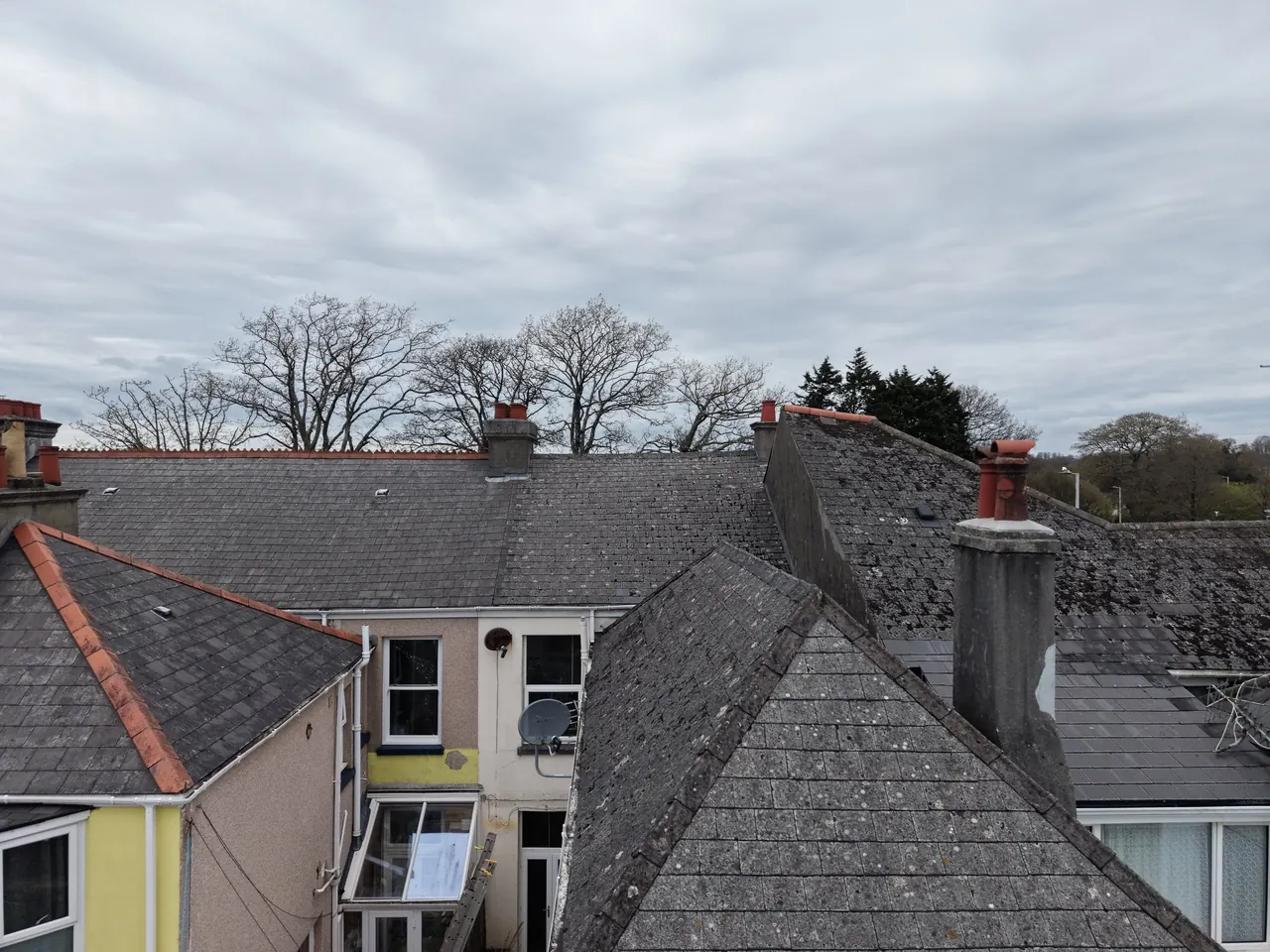
Because a dated record turns an argument into a fact. It shows what condition the roof was in, when you knew about a problem and what you did about it.
- Insurance claims. Many policies treat storm damage differently from gradual wear. Before-and-after photos help show which one you are dealing with. Check your own policy wording.
- Tenant reports and disputes. If a tenant reports a leak, a recent record shows what the roof looked like and helps your roofer go straight to the likely cause.
- Future standards. Both the Decent Homes Standard and the Awaab's Law proposals reward landlords who know the condition of their homes and act early.
Photograph from the same positions each time, keep the date and address with every file, and store the report with the tenancy paperwork. On Torr Lane, a new owner used our photo record to prioritise maintenance and budget; see it among our recent inspections.
How do letting agents and portfolio landlords use recurring drone checks?
A schedule usually works better than single jobs: a full inspection of each property once a year, targeted checks after storms, and a report in the same format each time.
- Grouping properties by area. Several addresses in Stoke, Mutley or Plymstock can be covered in one visit, weather permitting.
- A consistent report. The same viewpoints and layout each year, so changes stand out.
- Tenant notice handled by the agent. We stay outside, but tenants should know a drone will be overhead, and as the garden is normally theirs during the tenancy, we ask before taking off from it.
- Triage before the roofer. Photos let a roofer price the job more accurately and arrive with the right materials. On Milehouse Road, a significant leak above a staircase was traced to a lead-lined gully; the drone pinpointed it and Tom Duggan Roofing replaced it.
Plymouth's terraces make this worthwhile: shared stacks, hidden valleys and rear outshot roofs are hard to see from the pavement and costly to reach. Our landlords and agents service explains how recurring checks work.
Is a yearly roof check cheaper than waiting for a leak?
Usually, yes. A full roof inspection costs £150, while a leak found late can bring internal redecoration, an unhappy tenant and, increasingly, legal timescales on top of the roof repair.
We will not quote industry averages we cannot verify, but the logic is simple. A slipped slate or blocked valley is a small job for a roofer. Left through a winter, it can soak insulation, stain ceilings and cause damp and mould. The government's damp and mould guidance agrees: fixing the source of water can avoid ‘more expensive repairs later (such as rot treatment)’.
In one of our chimney cases, a suspected leak turned out to be visible masonry defects and missing flashing, which gave the roofer a clear brief instead of an exploratory visit. For a portfolio landlord, four properties checked yearly at £150 each is £600, against the cost and disruption of one ceiling coming down.
There are limits. This is a visual inspection, not a structural survey, and it depends on weather and airspace. If something needs a closer look, we will say so. Our comparison of drone and scaffolding inspections sets out the trade-offs.
Next step
Whether you let one home or fifty in Plymouth, get in touch for a free 15-minute call. Tell us how many properties you have, roughly where, and when tenancies change, and we will suggest a simple yearly schedule. You can also read more about us.
Frequently asked questions
Who is responsible for the roof of a leasehold flat I let out?
Usually the freeholder or management company, under the terms of the lease, with costs recovered through the service charge. As the landlord, you still need to report problems promptly and chase them, because your tenant will come to you first. Check your lease, and send the freeholder dated photos of the defect so they can act quickly.
What if the inspection finds nothing wrong?
Then you have a dated record showing the roof was in reasonable condition on that day, which is useful evidence if a tenant later reports a leak or you need to make an insurance claim. It also gives you a baseline, so next year's photos show exactly what has changed rather than leaving you to rely on memory.
How do I explain a drone inspection to a tenant?
Tell them in writing when we are coming, that the drone stays outside and is pointed at the roof, and that no one needs to enter the home. Ask whether we may take off from the garden or drive. Most tenants are glad to see a roof being checked, especially if they have reported a problem before.
Which areas do you cover for landlord inspections?
We are based in Plymouth and cover the city and surrounding areas to confirm: exact service area, working assumption Plymouth, South Devon and South-East Cornwall. Portfolio landlords and letting agents with several addresses can often have them grouped into one visit, weather and airspace permitting. Send us a list of postcodes and we will tell you what is practical.
Sources
- Landlord and Tenant Act 1985, section 11 (legislation.gov.uk)
- Guide for landlords: Homes (Fitness for Human Habitation) Act 2018 (GOV.UK)
- Guide to the Renters' Rights Act (GOV.UK)
- Implementing the Renters' Rights Act 2025: our roadmap for reforming the private rented sector (GOV.UK)
- Register your rental property service: guidance for landlords (GOV.UK)
- The New Decent Homes Standard: policy statement (GOV.UK, January 2026)
- Extending Awaab's Law to private rented tenancies and to licences: consultation (GOV.UK)
- Awaab's Law: guidance for social landlords (GOV.UK)
- Awaab's Law guidance for social landlords: timeframes for repairs in the social rented sector (GOV.UK)
- Understanding and addressing the health risks of damp and mould in the home (GOV.UK)